Archive for May, 2009

US Spelling Bee champ anything but indifferent

I know I’ve said that Americans don’t spell as well as the British, but there’s no doubting that the institution of the National Spelling Bee is given much more attention, time, and effort in the USA.

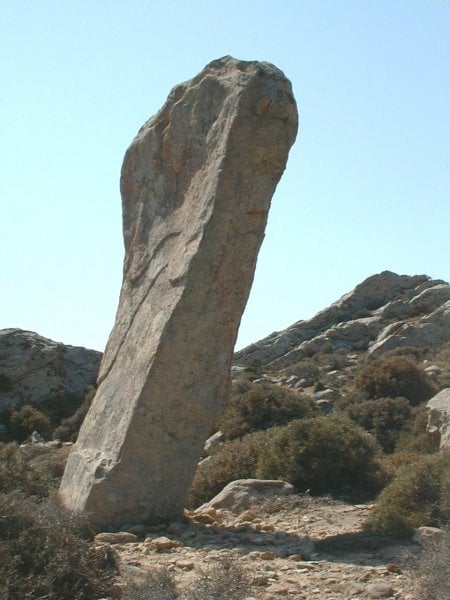
Menhir

Last week, 13-year-old Kavya Shivashankar from Kansas won the coveted spelling bee trophy by correctly spelling the word Laodicean.  The Round 16 word, meaning to be indifferent, especially in religion, put her ahead of the the two runners up, who misspelled menhir (an upright stone monument, carried around by Obelix in the Asterix comics) and Maecenas (a patron or supporter of the arts).

The months of training, which even included skipping her own birthday celebrations, paid off for Shivashankar, as she took home her prizes, worth over US$30,000.  She plans to be a neurosurgeon one day, but said that nothing would ever replace spelling.

It’s unlikely that most of us have ever heard of the majority of the words in the later rounds of the bee.  It’s even less likely that we’d have the opportunity to use them in real life.  Many of them have been adopted into English from other languages, making an already irregular spelling system even more difficult.  Here are a few for you to consider:

phoresy - a non-parasitic relationship where one organism carries another.

guayabera - a type of loose men’s shirt or lightweight jacket, popular in Latin America.

sophrosyne - moderation, discretion.

reredos - a decorative screen used on an altar.

Fourth-placed Kyle Mou tripped up on schizaffin, which I’ve had trouble even finding a definition for (a few different sources seem to think it means ‘characterised by a slender build with slight muscle definition’).  I think these kids deserve a lot of credit for their dedication, hard work, bravery (I don’t think I could go on national TV to spell words most people can’t even pronounce, let alone spell) and doing their bit to keep obscure vocabulary alive.

Full article from the BBC.

Comments (1)

Would you eat your own dog foot?

In just the last week, I’ve been involved in two separate mix-ups using the words food and foot.

Baby-foot

In the first instance, my friend and I were heading to a bar she recommended. On the list of positives about the place was what I heard as baby food. When I obviously had no idea what she was talking about, or why you would want baby food in a bar, we discussed it further, which included some amusing miming. It turns out that baby-foot is what they call table football, or foosball, in France (and other places). I learned something new.

In the second instance, I taught a Business English class where I introduced the phrase to eat your own dog food. This is predominantly used in the IT industry, and is used when a company uses its own product in-house, before the latest version is released to the public. The practice of dogfooding has its benefits and drawbacks. Anyway, after the class, which told the story of the dog food company whose advertising campaign led to the phrase, I received some homework which repeatedly used the term dogfooting. I can’t work out what she thinks eating your own dog foot involves, but it doesn’t sound fun. Maybe it’s putting your foot in your mouth, but even worse?

I’m not sure whether the problem is with the interchangeable /d/ and /t/ sounds, the long and short versions of oo, or some combination of the two. I know with the first example, it was probably a combination of mispronunciation and my trying to hear a phrase that sounded familiar (but didn’t make sense). Just looking at the two words, you would think they would rhyme, but they don’t. It’s no wonder non-native speakers get confused.

Comments

Laugh it up

I’m not really a fan of acronyms like LOL (laugh[ing] out loud), so I tend to stick with the written representations of laughing sounds, and the ones I usually use are hahaha (that’s funny!), hehehe (that’s kind of mean!), and hee (cute! squee!).

I’ve always thought the Spanish versions - jajaja, jejeje, jijiji - were really cute, but I have a tendency to read jajaja in a German accent, so it says ‘yes yes yes’.

Here are a few more ways* to show your humour in other languages:

Chinese
哈哈 / ha ha
嘿嘿 / hei hei
呵呵 / he he

Russian
ха-ха-ха (hahaha)
хи-хи (heehee)

Malaysian
kahkahkah (hahaha from comic books)

Turkish

eki eki (used in comics, as the older way of laughing)
muhaha (evil laughter)
nihaha (evil laughter)
puhaha, uhaha, zuhaha (used if something’s really funny)

German
hnhnhn, hmhmhm, chrchrchr (giggle)

My favourite at the moment is a Chinese coworker’s use of hohoho.  I don’t think she really means to sound like Santa Claus, but it brightens my day.


*Many of these examples are from WordReference Forums.

Isn

Comments (1)

Eggcorns on ice

When I was writing about my love of eggcorns (misheard words or phrases that still somehow make sense), I wondered how often they happen in foreign languages, especially for learners.  I got a bit of an answer recently.

One of my favourite things to order here in Asia is what is usually translated to a fruit ’smoothie’.  It’s not exactly what a western smoothie would be, and they’re usually made of fresh fruit blended with ice and sugar syrup.  Almost any fruit smoothie makes a delicious frozen snack or dessert.

For a while, I had only heard other people order them, and never seen it written down.  What I heard was bīngchá (冰茶), which means ice(d) tea.  I was a little bit confused, as iced tea is something completely different, but it kind of made sense.  Eventually I saw a menu, which showed 冰沙, instead, so I looked up the second character (shā).  The word for smoothie is bīngshā, or shābīng, meaning ice(d) sand or sand ice.

It makes much more sense to me now, and I created my very own eggcorn.  Has this happened to anyone else?

Comments (1)

Take a break, improve the internet

Software developers, psychologists, sociologists, linguists, designers.  Many people of different occupations spend a lot of time trying to work out how people’s brains work, what things we associate with which other things, and how to make our everyday lives easier and more intuitive.

A lot of internet-based programs aim to be as human as possible in their responses.  For example, if we put only two or three words into a search engine, it will try to give the most logical responses possible.  The methods behind it are complicated, but there are ways to help.

One way is to play the addictive games on Gwap.com.  By playing games that combine audio, visual, and linguistic components, developers can try to pinpoint the ways that humans think.  Which pictures are the most attractive?  Which words does everybody use to describe a certain thing?  How do people describe music?

The results of the games will be used to tag images, music, and more, and hopefully make them easier to find for others in the future.

Take a break from the study, and see which words come to mind.

How would you describe this?

Comments

How many is a billion?

1 billion US dollars

You’d think that the word ‘billion’ would mean the same to all English speakers, but, in fact, the two different meanings of the word are vastly different - 1,000,000,000 and 1,000,000,000,000 (one thousand million and one million million).  The first is the current ‘global’ understanding of the word (using the short scale, sometimes known as American usage), and the second, much larger number, uses the long scale or British usage.  As the numbers get bigger, the difference between them gets larger, as the short scale increases by thousands (e.g. a trillion is a thousand billions, or 1012), and the long scale increases by millions (e.g. a trillion is a million (long scale) billions, or 1018).

Most countries use the short scale, these days, but many still use the long scale.  Some countries, such as France and England, have used both scales at different times in history, so it’s important to check sources if you ever come across billion, trillion, etc in older publications.

The French word billion, German Billion; Dutch biljoen; Swedish biljon; Finnish biljoona; Danish billion; Spanish billón and the Portuguese word bilião all refer to 1012, being long scale terms. Therefore, each of these words translates to the modern English word: “trillion” (1012 in the short scale), and not “billion” (109 in the short scale).

On the other hand, the Brazilian Portuguese word bilhão (note the alternate spelling to the European Portuguese variant) and the Welsh word biliwn both refer to 109, being short scale terms. Each of these words translates to the English word “billion” (109 in the short scale).  [Wikipedia.]

I think the best thing to do if you have to communicate in such large numbers is just to use the numerals instead of the words!

Comments

What’s in a name?

SmithA person’s family name can tell a lot about their ethnicity, family history, even what their ancestors did for jobs.  Many older names reflect occupations, such as Baker, Tailor, Smith, and Cook. Surnames can sometimes give clues about where a family comes from, even down to a town or village.

There are a lot of genealogy resources available if you are interested in researching your own family name, or that of your friends. Behind the Name has family names from many different cultures and languages, from Basque to Icelandic, Romanian to Sikh.  An interesting addition is the Statistics option, which allows you to see how common a certain name is in the USA or England and Wales.

The Mandarin Chinese surnames Wang and Li are the most common surnames in the world, with over 90 million people each.

Just out of interest, my surname was ranked 459th out of 88,799 names in the US census of 1990.  You can also tell that my family is from a Cantonese-speaking part of China, as the English transliteration is ‘Wong’, not ‘Huang’ (which is a Mandarin spelling).

Comments

All about the benjamins

When I first heard the song It’s All About the Benjamins by Puff Daddy and friends, I wasn’t exactly sure what he was talking about.  This was back in 1997, though, when American slang wasn’t quite as widespread as it is now.  These days, I’m quite aware that benjamin* refers to a US $100 note, because of the portrait of former president and inventor Benjamin Franklin.  It’s more commonly used in hip-hop circles than everyday English, and has been mentioned on film (2002 film All About the Benjamins) and TV.  Puff Daddy (aka P Diddy, aka Sean Combs) has been credited with the first use of this term.  He even made it into the Oxford English Dictionary:

The OED lists him (as S. Combs) as the first citation (1994) for the word in the line “My pockets swell to the rim with Benjamins.” (from A.Word.A.Day.)

US 100 dollar bill

Benjamin* has also been used for many years in some European cultures to mean the youngest person in a family or group.  “The benjamin of the family”, “le benjamin de la famille” (French), “el benjamin de la familia” (Spanish), and “der Benjamin der Familie” (German) all mean the youngest child of a family.  It’s an older term that refers to the biblical Benjamin, who was the youngest of Jacob’s twelve sons.

*A word that is derived from the name of a particular person is called an eponym.

Comments (1)

Saying it all with just an eye look

Every language has words or phrases that address a concept particularly well, and often these can’t be translated into other languages. Sometimes we just use the original phrase, because it does the best job. A good example is the French je ne sais quoi, which means ‘a certain something’ - an indescribable quality that makes something or someone attractive or distinctive.  Many foreign phrases have that certain je ne sais quoi that our native tongues can’t match.

I’ve recently come across another phenomenon - where a non-native speaker creates a phrase that doesn’t exist in English, can’t really be called correct, and yet somehow describes the situation better than any phrases I can think of.

In a movie review, the writer talks about how the actor manages to convey drama and suspense, all with “a cigarette, a handshake, and an eye look”.  Now, I know exactly what she means by eye look, even though it’s not standard English.  It’s more specific than facial expression, and glance doesn’t have enough strength to do the job.  The look in his eyes doesn’t really convey the same kind of eye contact, and everything else I can come up with just isn’t quite as simple or effective.

Yet, eye look is still not “correct”, and not for any reason I can put my finger on.  It’s just not a normal collocation.

I think that the fact that these days there are a lot more non-native speakers than native speakers of English will lead to many more examples like this, and maybe eventually getting the message across will be more important than the words that comprise it.

Comments

Visualising the WordNet

VisuWords

Back in 1985, cognitive scientists at Princeton University began work on a lexical database called WordNet.  It’s essentially a dictionary and thesaurus which groups and links words according to their meanings.  WordNet provides users with synsets, which are groups of words or phrases which essentially mean the same thing.  It’s a great tool for writers, students, language learners, and anyone who needs a definition, synonym, or broader view of a word or phrase.  WordNet is searchable online, and a downloadable application is also available.

A fantastic extension of WordNet is VisuWords, which allows you to see a visual interpretation of the WordNet links for words of your choice, or random words.  Each visual map shows the possible meanings and synsets for the central word and the relationships between them all.  It’s also interactive, allowing you to move parts around to see them more clearly, and synsets move around in quite a calming and hypnotic way.  The above image is what comes up when you plug ‘language’ into the search engine.

WordNet has inspired wordnets for many different languages, and a full list can be found on the Global WordNet Association website.  Many of them are browsable online (e.g. MultiWordNet On-line*), and some also have visual interfaces (e.g. Asian WordNet Project**, aimsigh.com (Irish)).  The GWA’s aim is to integrate as many wordnets together as possible, to make a global grid.

*Searchable in English, Italian, Spanish, Portuguese, Hebrew, Romanian, and Latin.
**Searchable in Japanese, Thai, Vietnamese, Lao, Bengali, Indonesian, and others.

Comments

« Previous entries