Archive for October, 2010

New Apple patent is anti dirty words but pro language learning

iphone text filteringSo, a new Apple patent, which may or may not ever be used, is aiming to censor our texts. With the intention of providing better parental or corporate controls, this app aims to disable sending of messages until certain banned words are removed or changed.  It also provides an alternative use as a language learning tool.

The censoring function is supposed to discourage ‘sexting‘ and inappropriate language, both for kids and for adults. Should a parent (or a corporation, or jealous spouse) want to limit what their child (or employee, or suspect spouse) is sending out, they could turn on the censor, which would disable the send function until the language is changed. Bye bye inappropriate school-aged messages; bye bye sexual harassment suits. I’m not sure how smart the system is, though, and whether or not misspellings and ‘txt spk‘ abbreviations would get through (mmm, sxxxy).

The language learning side is interesting, though. Restrictions can be set for students so they must use their target language in emails or texts (either completely, or, say a certain number or percentage of foreign words) before the messages can be sent. It’s not completely practical (not everyone I send messages to will understand what I’m saying), but an interesting concept. Say I wanted to use a certain percentage of foreign words in my blog posts, it could come in handy.

Nothing’s been confirmed about what happens if you write dirty words in foreign languages, though!

Full article: Oxford University Press Blog.

Comments

Learning language through the Good Book?

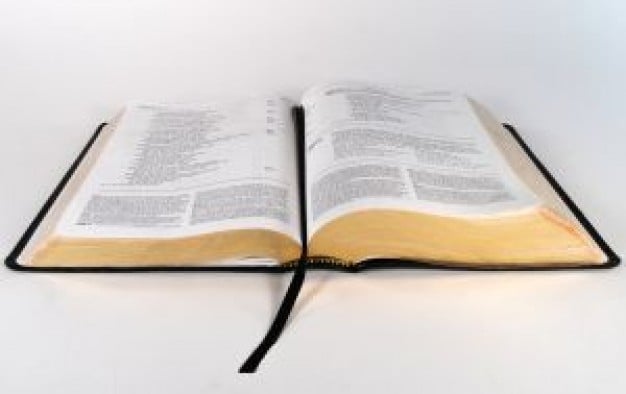
bilingual-bibleI saw mention in a language learning blog post about using a bilingual bible to help study English. To be honest, as a non-believer, this had never crossed my mind, but it makes  a lot of sense. If you read content that is both important to you and familiar to you in your own language, mastering the translation should work pretty well. Provided the translation is done well, of course. I guess the main problem I can think of is that some of the vocabulary and phrasing might not exactly be what you will use in real life, but at the same time, meaningful content will stick better in your mind, and any language practice is a good thing!

On the flip side, if you are interested in other faiths, using a translation in your own language might be a good introduction to reading, say, the Koran (or Qur’an) in its original Arabic, or traditional texts in their original languages.

Have you tried reading the bible or other traditional material in a different language?

Comments (2)

Do you speak English? Simon Pegg doesn’t.

This is an old skit, but it’s smart, funny, and brings up a good point about people speaking their own languages while in foreign countries. Sure, sometimes you don’t have any other choice, but… Anyway, just watch the video and tell me what you think in the comments.

Comments (1)

Languages across the pond, and zombies

zombiesI just stumbled across an excellent blog, Separated by a Common Language, about the differences between British and American English by an American linguist living in the UK. A lot of it is quite technical (although very interesting for people interested in linguistics), but it is very interesting.

One post that reminded me of my childhood was bags, dibs, shotgun. It talks about the way that people (mostly kids) lay claim to something. In the US, dibs is common, e.g., “I call dibs on that!”. In the UK, bags or bagsies is used, e.g., “I bags that!”

The post also talked about the word shotgun, which is used in the US specifically to call dibs on the front passenger seat in a car. It can sometimes be misinterpreted by non-Americans to just mean claiming something. I did use it in the American sense when I was growing up in New Zealand, though, so it may just be unclear to Brits and people who don’t watch a lot of American films.

Finally, the blog post quoted Twitterer @downrightcreepy:

I bet Zombies don’t call shotgun on roadtrips.

Comments

Celebrate Dictionary Day!

noah websterOctober 16 is Dictionary Day! In honour of Noah Webster (left, of Merriam-Webster Dictionary fame), who was born on October 16, 1758, today is a day to celebrate dictionaries, improving vocabulary, and language in general.

Look up some new words, find another way to say an everyday phrase, pick up a print dictionary and appreciate its pages.

If you’re at a loss, try a random word generator, or follow @langtrainers on Twitter for a new word every day.

Happy Dictionary Day!

Comments

Californian universities teaching indigenous American languages

Students at UCLA, UC San Diego, and other schools in California are deciding to learn indigenous Central and South American languages rather than the standard choices like Spanish, French or German. Students are now learning Mixtec and Zapotec (spoken in the Oaxaca region of Mexico), and Aymara and Quechua (spoken in the Andes – Bolivia, Peru, and Chile).

Many of the students will never go to a place where these languages are spoken, but some are using it as a base from which to travel or carry out charity work.

These new courses have even had positive consequences for the teachers. Some of the professors who grew up speaking indigenous languages were raised to think that Spanish, and then English, were more important than their native languages. For some, it wasn’t until they realised that other people wanted to learn about their cultures that they became proud of their languages and backgrounds.

I think it’s great that indigenous languages are being promoted at a university level. Hopefully one day they might even bring them into elementary and high schools.

Full article: LA Times.

Comments

Never-Ending Language Learning – robot curiosity

robotA research team at Carnegie-Mellon University has created a self-educating computer system called Never-Ending Language Learning (or NELL). It was designed to be able to work out the connections between words based on how they are used together.  The system was given pre-defined relationships between words and categories, and using this information, it can create its own interpretations of other words and phrases.

NELL was designed to learn as humans learn, and using information from websites all over the internet, it can also update its knowledge if it finds conflicting information (unlike humans sometimes!). In the future, researchers hope that NELL will be able to work out context in regular human speech, and provide answers to questions without a real person to moderate.

It is still a new technology, despite already having learned over 440,000 facts with 87% accuracy (at time of writing), so it does have its limitations.

From the New York Times article, Smarter Than You Think – Aiming to Learn as We Do, a Machine Teaches Itself:

Take two similar sentences, he said. “The girl caught the butterfly with the spots.” And, “The girl caught the butterfly with the net.”

A human reader, he noted, inherently understands that girls hold nets, and girls are not usually spotted. So, in the first sentence, “spots” is associated with “butterfly,” and in the second, “net” with “girl.”

“That’s obvious to a person, but it’s not obvious to a computer,” Dr. Mitchell said. “So much of human language is background knowledge, knowledge accumulated over time. That’s where NELL is headed, and the challenge is how to get that knowledge.”

Initially, NELL ran by itself, but researchers decided it would be best to begin correcting significant mistakes as they went. One amusing mistake was quoted again in the article:

When Dr. Mitchell scanned the “baked goods” category recently, he noticed a clear pattern. NELL was at first quite accurate, easily identifying all kinds of pies, breads, cakes and cookies as baked goods. But things went awry after NELL’s noun-phrase classifier decided “Internet cookies” was a baked good. (Its database related to baked goods or the Internet apparently lacked the knowledge to correct the mistake.)

NELL had read the sentence “I deleted my Internet cookies.” So when it read “I deleted my files,” it decided “files” was probably a baked good, too. “It started this whole avalanche of mistakes,” Dr. Mitchell said. He corrected the Internet cookies error and restarted NELL’s bakery education.

So, the technology isn’t perfect yet, but these corrections can be viewed in the same way as a language teacher correcting your usage of a particular word. We all need a helping hand sometimes!

Update: NELL is now on Twitter (@cmunell)! Updates consist of a word or phrase and a category she thinks it belongs to. Followers are asked to send in corrections to improve the process. Sometimes she’s totally correct (I think “John MCain” is a ()), and sometimes not so much (I think “US President-elect Barack Obama” is a ()). What is a politicianus? Oh, I think she meant US politician. Right.

Comments off

Case in point: uppercase is dangerous

Wall Street signWhen I was younger, I had a friend who wrote only in capital letters. I always thought it must have taken him longer to write than lowercase, and it was a bit more difficult to read (not to mention the fact that all caps makes it look like you’re being shouted at).

Now, it seems that it’s been proven that text in uppercase is more difficult and time-consuming to read than lowercase (or initial case). It only takes a few milliseconds longer, but the US federal highway administration has decided that these milliseconds could be life-threatening.

From the New York Post:

“Studies have shown that it is harder to read all-caps signs, and those extra milliseconds spent staring away from the road have been shown to increase the likelihood of accidents, particularly among older drivers.”

The city of New York has decided to change all of their street signs from all caps to initial caps in order to increase safety on their streets. This move will cost an estimated 27.6 million US dollars, including the design of a new font, Clearview.

I’m in favour of safety as well as new typefaces, so I hope this move will lower the road toll in New York City.

Full article: guardian.co.uk.

Comments