
Italian Directions Guide: Vocabulary, Phrases & Examples
Asking for directions is one of the simplest ways to start using Italian in real life. Even…


UK 0330 460 95 64 Ireland 01 574 7871

UK 0330 460 95 64
Ireland 01 574 7871

Asking for directions is one of the simplest ways to start using Italian in real life. Even…

Speaking Italian in business meetings takes more than learning workplace vocabulary or memorising a few useful expressio...

pend even a few days in Italy and you’ll notice something immediately: Italians are not shy with…

When the world turns its eyes to the Vatican, Italian takes center stage. As the official language…

Planning a trip to Italy? Before you dive into pasta, gelato, and piazzas, there’s one cultural tool…
Everyone knows Italian cuisine for its ancestral recipes and fresh, flavourful ingredients. While Italian food has sprea...
Acquiring a new language is a long-term investment, we know that. Especially if your target language differs widely from your native tongue, as in the case of Italian and English. However, this effort certainly pays off once you start enjoying all the benefits of being bilingual! If you are not sure whether learning Italian is good for you, keep on reading and be convinced.
Italy is one of the most visited places in the world and that’s no surprise: it’s the place with the most UNESCO World Heritage Sites on the planet! And its charm is not just to be found in Rome: Florence, Venice, Torino and Tropea are only some of the dozens of other Italian locations that will take your breath away!
Now, if you speak fluent Italian, you’ll be able to discover hidden gems in this wonderful country by visiting places unknown (or inaccessible to non-Italian-speaking tourists) while immersing yourself in this fascinating culture.

Rome

Florence

Venice

Torino

Tropea
Did you know that over 85 million people worldwide speak Italian? This is not only the official language of Italy but it’s also spoken natively in parts of Croatia, Slovenia, and Switzerland. Therefore, you’ll have you’ll have 65 million potential new friends once you are fluent in Italian!
”My lessons are going great! We go through useful worksheets tailored to my needs and try to have lots of conversation.”
Josh Maunder - Italian course in Sheffield
Italian is known as the language of music, as Italy was the birthplace of opera and many renowned composers like Puccini, Bellini, Verdi, and Rossini. When it comes to contemporary artists, Italy doesn’t fall short, either. From Laura Pausini to Luciano Pavarotti or Andrea Bocelli, you’ll surely find something to your taste. Learn Italian and start singing masterpieces like Con Te Partirò without pronunciation mistakes!
The short answer is yes! Italy is the third-largest economy in the European Union and has strong trading ties with the UK, amounting to more than £8 billion in 2017. Something similar happens with the USA, which is one of Italy’s most important trade partners, with two-way trade in goods and services in 2019 valued at $103.112 billion.
Plus, if you live in the UK and work in the financial sector, you’ll find dozens of job advertisements in which knowing Italian is a plus. Start studying Italian today and give your résumé the competitive edge it needs!
Now that you have decided to take the leap and start becoming bilingual, you are faced with another equally important decision: whether to learn alone or take language lessons. Both of these practices have several pros and cons and might be better for certain students.
For instance, your instructor can pinpoint your strengths and weaknesses and provide you with the best materials to address them, and it’s not that easy to do so by yourself. However, learning alone gives you more independence and control over your study hours, and you don’t have to commute anywhere to learn.
The following infographic quickly summarises some of the differences between learning Italian on your own and studying the language with a professional tutor, whether alone or with a group.
| Learning alone | Private lessons with a teacher | Open group lessons with a teacher | |
|---|---|---|---|
| Schedule | Complete freedom over your schedule | Reschedule with at least 24-hour notice | No rescheduling |
| Interaction & Peer Learning | No interaction with peers | Converse with your teacher | Real-life communication |
| Intercultural Exchange | No intercultural exchange | Intercultural exchange with your native tutor | Intercultural exchange with people all over the world |
| Location / Commute | No commuting | Commuting unless it’s online | No commuting (online lessons) |
| Feedback | No feedback | Personalised feedback | Personalised (though limited) feedback |
| Cost | Free of charge | Monthly fee depending on hours | Affordable 15-hour courses |
All in all, learning Italian with a teacher is your best option if you wish to become fluent in a short time without getting bored or frustrated. Enjoy immediate feedback and real-life communication while you bond with a native-speaking professional with years of experience. Contact us today to enquire about our closed group, open group, or individual lessons and embark on your Italian journey!
If you are looking to learn Italian today, you should know there are dozens of dialects and varieties. One of them is Standard Italian, which comes from the Tuscan variety that was spoken in Florence since the 14th century. But if you go to Naples, Sardinia, Venice, and almost any region in Italy, you’ll see that people speak something that sounds like a completely different language.
Today, dialects are still spoken across Italy, although their use has declined considerably over time. According to the latest ISTAT data on the use of Italian, dialects, and foreign languages, collected in 2024, around 42% of people aged six and over use a dialect in at least one social context, either on its own or alongside Italian. Dialects are most common in close relationships: 38% of Italians use one at least occasionally with family and 35.5% with friends, compared with just 13% when speaking to strangers. The same study shows a clear long-term shift towards Standard Italian, with the share of people speaking exclusively or mainly in dialect at home falling from 32% in 1988 to 9.6% in 2024.

So, the Italian dialects can be divided into three main groups:
Would you like to hear how these accents sound? Take a look at this video by Italian comedian Enrico Brignano and find out! And you can read our article about the languages of Italy and learn more about these fascinating linguistic varieties.
Learning a language is much more than knowing grammatical rules or vocabulary. It also entails understanding the culture, values, and traditions of the people who use it. Here are some examples of the essential elements of the fascinating Italian culture!

Did you know that Italians use more than 250 gestures and facial expressions on a daily basis? This means that no conversation is complete without them. For example, the hand horns used in the USA in rock concerts have a different meaning in Italy: to protect yourself from the evil eye. Learn more about these essential hand gestures with our article!

Celebrations and festivals are very common in Italy. In addition to national holidays, almost every region in the country has its own festivities. From the carnival in Venice to the Milano Fashion Week, you can have the time of your life if you attend these festivals! Just bear in mind that, during these regional or national holidays, museums, bars, and shops will probably be closed.

In addition to their gestures and facial expressions, Italians are well-known for their delicious cuisine. Cheese, pasta, wine, and olives are essential parts of Italian meals. Plus, family gatherings are frequent and always centred around food. So, if you’d like to know more, read our article and discover more about this fascinating food culture!
So, have you decided to take the leap and start learning Italian on your own? That’s an excellent decision! We would like to accompany you on your language journey with the following resources, apps, and tools so you can improve your skills in an integral way without leaving your home. Let’s go!
If you have studied Italian in the past or have had some kind of contact with the language, one of the first things to do is to determine your level. And what better way than to do this with one of our FREE level tests?
They are easy to take: you’ll be presented with sets of ten questions with missing words or phrases and you need to choose the correct answer. Just keep in mind you shouldn’t guess or you’ll end up with inaccurate results. If you are not sure about the answer, choose the option ‘I don’t know’. Learn more about our Italian level test scoring here.
Further, you can choose between answering just one set of 10 questions or the whole test of 70 questions. If you get tired and would like to know your results without completing the whole test, you just have to click “Get my results” and you’ll receive your results immediately. Take our test here!
There’s no better way to learn Italian online than by using materials that motivate and interest you. For instance, if you are passionate about cinema, you should use Italian films to improve your pronunciation, listening and reading comprehension skills, and knowledge of their culture. Some Italian movies you cannot miss include:
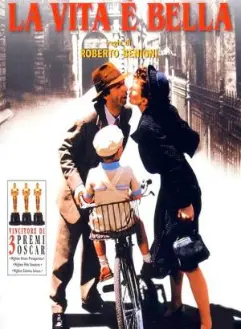
(1997)
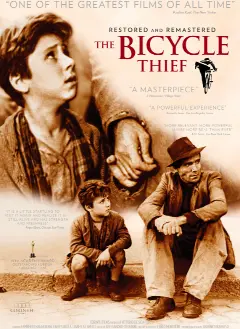
(1948)

(1960)

(1958)

(2018)
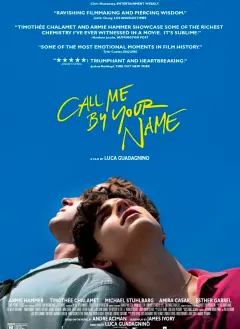
(2017)
Today, countless language apps can help you learn Italian for free while having fun! Most of them have short, bite-sized lessons focused on vocabulary (isolated items or phrases) for language learners with a busy schedule. While most of them can be used for free, there’s a small monthly fee to pay if you want to access their features in full. Some great apps to learn Italian, then, are:
Are you a music lover and would like to acquire Italian using what you love the most: songs? Then, you’ll be happy to know there are dozens of Italian artists that can help you achieve your goal. By listening to their songs and singing, for example, you can polish your pronunciation. And if you use the lyrics, much the better! Here are some resources that can help you learn Italian online using music:
Using the news to learn Italian is an excellent way to polish your listening skills while learning what is going on in Italy and the world. Let’s take a look at some resources you can use to learn Italian for free while watching the news:
Flashcards are amazing for visual learners to learn Italian interactively. And the best thing is that you don’t have to rely on your drawing skills anymore! There are dozens of free and paid apps and sites where you can design your own flashcards online. You can include pictures, words or phrases, audio recordings, and virtually anything that will help you remember new Italian vocabulary. Some options are:
Italian grammar can be nightmarish to learn, especially for those who don’t speak any other Romance language. Italian has 5 tense forms, but, unlike English, each person has a different conjugation. For instance, the past continuous of the verb mangiare (to eat) is:
| Italian | English |
|---|---|
| Io mangiavo | I was eating |
| Tu mangiavi | You were eating |
| lui/lei mangiava | He/she/it was eating |
| Noi mangiavamo | We were eating |
| Voi mangiavate | You were eating |
| Loro mangiavano | They were eating |
So many conjugations mean that you’ll probably need some help when learning how to use verbs in Italian correctly. So, if you are looking for a good verb conjugator to take your Italian grammar skills to the next level, you can access one of these sites:
Plus, you can master the Italian grammar rules using sites with exercises and worksheets for students of all levels. Websites like One World Italiano, Online Italian Club, or Impariamo l’italiano are loaded with grammar exercises, quizzes, and short video lessons so you’ll not only increase your understanding of grammatical rules but also be able to put them into use.
Well, it depends on whom you ask! Italian can be very easy to learn for those who already speak a Romance language. However, for English speakers, Italian may not be so simple, which is why learning with an experienced tutor is your best choice! Here are some reasons why:
And if you already know something about phonetics and phonology, you can take a look at this technical guide compiled by the University of Stanford!
Travelling to Italy soon? Start learning some phrases that will help you get by in this beautiful country! Find some survival phrases below in case you are not lucky enough to find English speakers on your way. Plus, you can read our article about 10 Italian slang expressions you need to know to sound fluent!
| English version | Italian version | |
|---|---|---|
| Greetings | Hello / Hi | Ciao! |
| Greetings | How are you? / How are you doing? | Come stai?/Come va? |
| Greetings | Good morning/afternoon/night | Buongiorno/Buona sera/ Buonanotte |
| Thanking others | Thank you! Thanks! (You're welcome) | Grazie (Prego) |
| Thanking others | I appreciate it. | Lo apprezzo |
| Asking for forgiveness | Apologies | Mi scusi |
| Asking for forgiveness | I’m sorry / I’m very sorry | Scusa. Scusami tanto |
| Asking for help | Where is... the bathroom/the kitchen? | Dov'è il bagno/la cucina? |
| Asking for help | Can you help me with... my luggage/my phone? | Mi puoi aiutare con il mio bagaglio/il mio telefono? |
| Asking for help | There is a problem with/ I have a problem with... | C'è un problema con/ Ho un problema con... |
| Asking for information | How can I get to... the museum/the hotel/the restaurant? | Come posso arrivare al museo/all’hotel/al ristorante? |
| Asking for information | Do you know where...? | Sai...? |
| Asking for information | Could you tell me...? | Potresti dirmi...? |
| Ordering at the restaurant | I'd like the tuna salad/a sandwich, please | Vorrei l'insalata di tonno/ un panino, per favore |
| Ordering at the restaurant | I'll have the steak/french fries, please | Prendo una bistecca/ le patatine fritte, per favore |
| Ordering at the restaurant | Nothing for me, thanks. | Per me niente, grazie |
| Asking for clarification | Sorry, can you repeat? | Scusa, puoi ripetere? |
| Asking for clarification | I don't understand. Can you say that again? | Non capisco. Puoi ripeterlo? |
| Asking for clarification | What do you mean by...? | Cosa vuoi dire con...? or Cosa significa...? |
| Inviting someone | Would you like to... go to the cinema? | Ti piacerebbe...andare al cinema? |
| Inviting someone | Do you want to ...? | Vuoi...? |
| Accepting an invitation | Yes, thank you | Sì, grazie. |
| Accepting an invitation | Sure! | Sicuro! |
| Accepting an invitation | Let's do it. | Facciamolo. |
| Rejecting an invitation | No, thank you | No, grazie |
| Rejecting an invitation | I'd love to, but I'm busy right now. | Mi piacerebbe, ma sono occupato adesso |
| Rejecting an invitation | Thank you, I have other plans. | Grazie ma ho altri piani |
| Asking for the price | How much is this? | Quant'è? |
| Asking for the price | How much does this cost? | Quanto costa? |
| Basic Phrases | Yes / No | Sì / No |
| Basic Phrases | My name is... | Mi chiamo... |
| Basic Phrases | What's your name? | Come ti chiami? |
What are you waiting for? Start your Italian language journey with us today! Our native-speaking teachers will be there for you every step of the way, regardless of your proficiency level, background, or age. Reach out to us and find out how our Italian courses work!

