Archive for Japanese

Japanese alphabet systems

Did you know that Japanese has three different alphabets? I didn’t until today!

The first is Kanji. There are 214 Kanji characters, some of which are known as radicals. Radicals are characters which are used to form other characters.

Romaji is the way of writing Japanese using the Roman alphabet. Romaji literally means Roman. All Japanese words can be written in Romaji, making it easier for us Westerners to pronounce Japanese words, or at least know whereabouts in Japan we are!

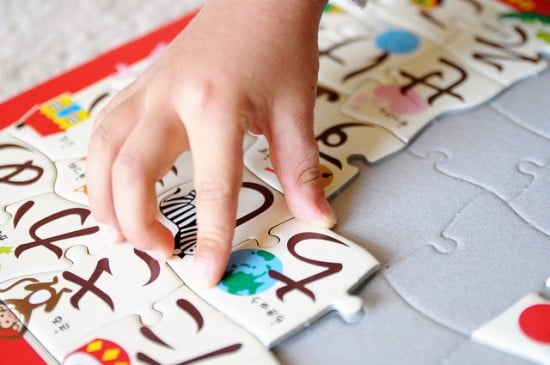
Kana is a writing system based on syllables. There are two components to this – katakana and hiragana. They each consist of 46 characters which are basically simplified kanji. If you know this and are looking at a Japanese text, you should be able to distinguish between the more complex kanji characters and the simplified kana. Hirigana is the first text taught to Japanese children, so is a good place to start if you’d like to learn Japanese – although you must realise that in the Japanese language, hirigana is used mostly for grammatical endings of words or particles. Katakana is used mainly for words which cannot be written in kanji, such as names or places.

Confused? Unfortunately there’s no way around learning these things if you’d like to study Japanese! Luckily, Langauge Trainers offer Japanese lessons all over the UK, check the home page for details.


Comments

5 upcoming festivals for language and culture vultures

LOTS of language events to look forward in the coming weeks and months around the UK! Here’s a round up…

Venues include the Tate Modern, Riverside Studios and the Barbican Cinema in London, FACT in Liverpool, the Filmhouse in Edinburgh and the Queens’ Film Theatre in Belfast.

The 11th annual festival will host not only films but Q&As with directors, free kid’s animation workshops and interactive cinema workshops for budding writers and directors.

This is a free folk festival which marks the beginning of Spring as well as being a Russian Orthodox celebration. The festivities are to include music and theatre performances and a bazaar with an assortment of handicrafts. As always you can sample a variety of Russian dishes and maybe even some vodka!

Waterstones in Piccadilly will also be holding a Russian literary event, including a poetry reading and a competition to win Russian books, on 13th March.

  • The London Asian Film Festival also runs from 7th – 17th March and is this year hosted by multiple venues, including the BFI Southbank and the House of Commons!

A biennial event, Shubbak is a celebration of Arabic culture from all 22 Arabic speaking countries.  The festival encompasses architecture, dance, film, literature, music, poetry, theatre and visual arts.

From biennial to bi-annual, Hyper Japan is back at the Earls Court Exhibition Centre this July, from 26th – 28th. It’s always packed so if you’re interested, book now! My good friend Emily is the food/drink photographer for the event; you can see her pictures on her blog here and get a taste of what it’s all about!

These events are a great way to further immerse yourself in the culture of the language you’re studying so I recommend you take the opportunity to visit if you can!

Comments

Xmas present ideas: Part 2

If, like me, you’re learning Spanish, then you might want to consider adding this puzzle book to your Christmas list. Wordsearches and crosswords are a great way to test your vocabulary skills. I use crosswords to practise my native English too!

This one is available from Waterstones. If you’re learning a different language, no worries…others are available in Italian, German, French, Swahili, Hindi, Japanese, Pashto, and even Hawaiian!

Comments off

Which is the most efficient language?

Language journal has published a study by three linguists at the University of Lyon, showing that certain languages are more or less equally efficient.

The study compared the efficiency of conveying information in spoken German, Mandarin Chinese, Japanese, English, French, Italian, and Spanish.

Researchers took a sample group of 59 people, who each read a sample text in their native language. The recordings were then edited to remove the pauses, and syllables were tallied in order to draw conclusions regarding the density of information communicated in each language.

Japanese was found to be the fastest spoken language, with 7.84 syllables spoken per second. Mandarin Chinese was the slowest, with the average syllabic speech rate at 5.18. However, the researchers note that in ‘faster’ languages, the individual parts of words are shorter, meaning there are more syllables. They concluded that a higher rate of syllables by no means implies that content can be transmitted more quickly.

A more comprehensive study, carried out by University of Klagenfurt linguistics professor Gertraud Fenk-Oczlon in 2010, reached similar conclusions. In this case, 51 different languages were recorded, with Indian language Tegulu found to be the fastest, and Thai the slowest.

The latest study, in more detailed form, can be found here.

Comments (1)

How much does language influence culture and thought?

Most people think of language as a way to communicate and describe the world around us, but have you ever considered how much our language affects how we see the world?

I read a great article on the Wall Street Journal about just this.  It’s not something that I really think about unless it’s put in front of me, but language really can affect how we interpret the world.

One of the most interesting parts of the article talks about how some cultures (up to a third of languages!) don’t have words like left and right, and instead talk about direction in absolute terms (north, south, etc.).  In these languages, you would talk about things like your east leg, or your northwest arm, depending on which direction you were facing.  If you’re thinking about absolute directions all the time, you are most likely going to be better at finding your way around.  Also fascinating was that for people who speak languages where no blame is given to accidental wrongs (e.g. someone knocking over a glass), it is more difficult to remember who did it.  For example, in English we would say that ‘Jack knocked the glass over’, but in Japanese or Spanish, they would just say that the glass had been knocked over.  I wonder how much this has perpetuated the tendency in English-speaking countries to lay blame on others for things that happen to us.

Does language shape culture, or does the culture we live in affect the language we use?

Comments

Computer-based character writing practice: Skritter

With the script technology available these days, it’s uncommon for language learners to focus so much on the writing of languages like Japanese and Chinese.  All you need to do is recognise a character, and know what it sounds like, to be able to write it on a computer.  Even in my own study, I am trying to focus more on reading, listening, and speaking, as it seems like it will take a long time to rote learn individual characters.

On the flip side, learning how to write characters yourself helps make them more concrete in your mind, and can really help you understand them and their relationships to other words and characters.  A useful tool I’ve found to help you write Japanese or Chinese (on the computer, no less!) is Skritter.  With Skritter, you can practice writing characters on the screen, and the program can help you with stroke order as well as giving useful information about the characters and radicals.  It also provides a tracking service so you can see your progress, and focus more on characters that you are having trouble with.

They provide a two week full service trial for learners of Japanese and Chinese (both traditional and simplified), so if you want to improve your writing skills, check it out!

Comments (3)

Not so easy on the eyes

uglyA lot of phrases in English are understatements, as if we don’t want to commit too much to what we’re saying.  One of them that springs to mind is easy on the eyes, which is another way to say someone is good looking, sexy, beautiful.

In Chinese, there is the opposite.  The word they use for ‘ugly’ is 难看 (nánkàn), which is, literally, hard to look at. Ouch. The Japanese also have the word バックシャン (bakku-shan) for someone who appears hot from behind, but not from the front.

Do you know any other interesting phrases for someone who’s not so easy on the eyes?

*Note: looking up ‘ugly’ on Google Images isn’t really that good of an idea.

Comments (1)

Sorry seems to be the hardest word: apologising in Japan

The Japanese bowI’ve just read an article about the often difficult practices of apologising in Japan.  The article itself is focussed mainly on corporate responsibility-taking, but it talks about some interesting facets of Japanese apologies, which are of many different degrees, including the depth of bow accompanying them.

The art of apology is an intrinsic part of Japanese culture. When you ask a shopkeeper for help, or when you bump into someone on the inevitably crowded trains, you say “sumimasen.” A direct translation of this phrase is “excuse me,” but a more a more accurate rendition is “I am so sorry to bother you.”

Apologizing is as common as saying please and thank you. It is a way of maintaining harmony in social situations. If you are the first to leave work in a Japanese office, you say “Osaki ni sitsuree simasu,” which means “I commit the great rudeness of leaving first.”

It also gives some extreme examples of historical corporate apologies:

Japan has a long history of corporate personal apology in Japan. In 1985, following the crash of Japan Airlines flight 123, the president of JAL Yasumoto Tagaki assumed full responsibility for the accident, the worst single-airplane incident in aviation history. Of the 524 passengers only four survived.  Takagi went to the extraordinary length of personally visiting the families of the victims. It was only after he had fulfilled this obligation and offered one last public apology that he resigned. Another JAL employee, a maintenance manager apologized in a more extreme manner: he committed suicide.

Some apologies don’t actually apologise, either.  Sometimes they include remorse and regret, and sometimes even compensation, without ever actually taking responsibility and giving apology.  Do you think these are valid apologies?

Some parts of culture are so deeply ingrained in countries that it becomes very difficult for outsiders to get a grip on them.  How is apologising different in your country?

Source: MSNBC.

Comments

Resources: Chinese and Japanese character practice paper

For regular note-taking and writing practice, everyone has their own preferences for paper – lined or unlined, spiral bound, A4, A5, 100gsm.  Then there are the writing implements – pens, pencils, markers.  Some people prefer just to record audio, or use a laptop or netbook.  Even with all of these choices, when it comes to specialist paper for writing Asian characters, it can be difficult to find what you want if you don’t live in a place with a large Asian community.

I’ve found a few online resources for downloading and printing your own character practice pages, and will list them below.  Please add more in the comments if you know of any!

Dr Lili Worksheet – Character worksheet with spaces for name and date.  Grid with horizontal and vertical internal lines.  Has room under each line for writing pinyin/notes.

Dofufa practice paper – Character practice paper with three different sizes of grid.  Internal horizontal and vertical lines.

Incompetech free online graph paper - Probably my favourite resource for printing paper.  They have a lot of different kinds of graph paper, as well as note-taking paper and a few options for Chinese and Japanese character practice.  Their graph paper generator allows you to choose the size of your paper, the size of the grids, and even what colour you would like to print in.  Try printing in landscape for even more options.  My favourite is the Chinese Character Guide (X-style), which has room for writing pinyin as well as diagonal internal lines.

Good luck with the practice!

Comments

Voice recognition allows transcripts of Japanese podcasts

Good news for Japanese language learners: the Japanese government has sponsored a website that allows transcription of any podcast recorded in Japanese.  Podcastle produces automated transcription of Japanese podcasts into Kanji, and from there, users of the site can correct and modify as necessary.

I’ve already discussed how useful podcasts and radio shows can be for language learning, especially when teamed with transcripts to refer to or read over before or after listening.  Using a lot of audio for learning will help to improve your listening, pronunciation, and speaking fluency.

By all accounts, the transcriptions aren’t perfect, but that’s to be expected.  As technology gets more accurate, and as the site gains more users, transcripts will become much more accurate.  As it stands, they might be better for intermediate and advanced learners of the language, but it is still a worthwhile effort.

For more information and a review of the service, go to Street-Smart Language Learning™.

Comments

« Previous entries Next Page » Next Page »