
Hispanic Christmas Traditions & Vocabulary: An Argentine’s Personal Guide for Spanish Learners
 Posted by
 Christmas in Argentina lives on in my memory as a warm night full of noise, family, and the unmistakable smell of summer. When I was a child, Nochebuena (“Christmas Eve”) meant long dinners outdoors, cousins running around with sparklers, and that magical moment when the adults would say, “Vamos afuera a ver los fuegos artificiales…” (“Let’s go outside to watch the fireworks…”). We’d scan the sky looking for Papá Noel (“Santa Claus”), and by the time we returned inside, the presents had “appeared” under the tree. Those nights were loud, chaotic, and filled with the certainty that everyone belonged exactly where they were.
“You don’t just learn vocabulary. You learn ways of living.” — Juan Manuel Terol
Years later, when I celebrated Christmas abroad for the first time, after moving to Spain, I realised how deeply culture shapes the rhythm of the holiday. In Spain, Christmas felt colder, quieter, and marked by different traditions. And when Mexican friends told me about posadas, tamales, and piñatas, I discovered another universe of celebrations altogether. Those contrasts taught me something essential for Spanish learners. You don’t just learn vocabulary. You learn ways of living.
This guide brings those worlds together. It draws from my childhood in Argentina, my life in Spain, and the conversations I’ve had with students and friends across Latin America. By the end, you will know how to talk about an Argentine Christmas – and also understand the warmth, timing, and summer air behind the words.
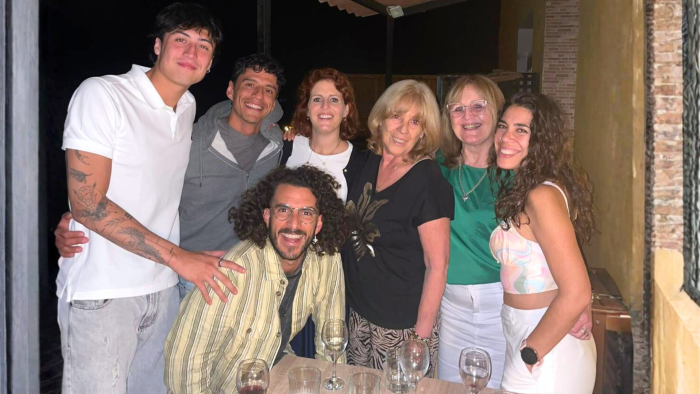
How Does Christmas in Argentina Compare with Christmas in Spain? My First Christmas Abroad
My first Christmas in Spain arrived with an unexpected shock: the cold. After a lifetime of celebrating outdoors in short sleeves, suddenly Christmas meant coats, heating, and evenings spent indoors. That change alone transformed the atmosphere. Christmas felt calmer and more wintery, completely different from the loud, open-air nights I knew in Argentina.
But the real surprise came when I asked a colleague what her kids were hoping to get esta Navidad (“this Christmas”). “Oh, the big presents?” she said. “We’re saving those for Reyes.” Reyes Magos refers to the Three Wise Men, who in countries like Spain bring gifts to children on January 6th.
For an Argentine, waiting until January sixth – the Day of the Reyes Magos – feels unimaginable. In Argentina, everything happens at midnight on the 24th. Kids run outside to see the fireworks, presents appear under the tree, and the whole family shouts “¡Feliz Navidad!” (“Merry Christmas!”) at the exact moment the clock strikes twelve.
Spain introduced me to traditions I had never lived before: the Cabalgata de Reyes (“Three Kings Parade”), a huge procession where children catch candy thrown from colourful floats; the Misa del Gallo (“Midnight Mass”), a long-standing custom where families attend church right as Christmas Eve turns into Christmas Day; and the world of Christmas sweets like turrones (almond nougat bars), polvorones (crumbly shortbread-style biscuits), and the Roscón de Reyes (“King’s Cake”), a crown-shaped pastry eaten on January sixth.
What struck me the most during that first Christmas wasn’t just the traditions – it was the timing of everything. Spaniards move through the holiday at a slower, more deliberate pace. Dinner starts earlier and feels more formal, the night is quieter, and people rarely stay up until the early hours like we do in Argentina. I remember looking at the clock, expecting the energy to rise as midnight approached, and instead finding myself in a calm, warm living room while the family chatted softly over dessert. It was beautiful in its own way, but I felt the absence of that collective countdown, the noise, the hugs, and the explosion of fireworks that had always defined Christmas for me.
That’s the beauty of the Spanish-speaking world. One word – Navidad (“Christmas”) – contains dozens of celebrations. My Argentine background and my life in Spain remind me every year that when you travel (or learn a language!), you don’t just get to use different words and sounds; you join the stories, rhythms, and traditions of millions of people.
What Are the Key Christmas Words Spanish Learners Must Know?
One of the best ways to understand an Argentine Christmas is through the words we use. Many of them don’t appear in textbooks, yet they describe the heart of the celebration: the food, the family roles, the objects that fill the table, and the warm expressions everyone repeats throughout the night. These terms help learners picture the scene the way it truly looks in a South American summer – loud, bright, and full of shared traditions.
Christmas-related Spanish phrases
These are the Spanish words and phrases you’ll hear throughout December in almost every Argentine home:
- Armar el arbolito (“set up the Christmas tree”) – traditionally done on December 8th.
- El pesebre (“the nativity scene”) – families place figurines around the tree or on a side table.
- Papá Noel (“Santa Claus”) – the character every child hopes to spot in the sky before midnight.
- Los regalos (“the presents”) – placed under the tree but only opened at midnight. on the 24th.
- La Nochebuena (“Christmas Eve”) – Nochebuena is the term used in the Spanish-speaking world for Christmas Eve, the night when families gather to celebrate and the main celebration of the season.
- La pirotecnia (“fireworks”) – everything from cohetes (“rockets”) to estrellitas (“sparklers”).
Spanish Terms for Typical Christmas Foods and Drinks
Christmas in Argentina tastes like summer. Because of the heat, most dishes are served cold or at room temperature, creating a vocabulary set that feels very different from winter-based Christmas traditions:
Foods
- Vitel toné – thinly sliced beef with a creamy tuna and anchovy sauce; a classic on every table.
- Pan dulce – our version of panettone, filled with nuts or candied fruit.
- Garrapiñadas – caramelised peanuts sold on every corner in December.
- Budín – a sweet loaf cake, often lemon or vanilla.
- Pionono / torre de panqueques – a rolled sponge cake or layered pancake tower filled with savoury ingredients.
- Sanguchitos de miga – crustless sandwiches, the heroes of every summer celebration.
- Mayonesa de ave / arrollado de pollo – cold chicken salads or chicken roulades.
Drinks
- Sidra (“apple cider”) – essential for the midnight toast.
- Lemon champ – sparkling wine mixed with lemon ice cream.
- Fernet con coca – a national favourite: Fernet liqueur with cola.
- Clericó – a fruity summer punch.
These words paint the table exactly as it looks: colourful, fresh, and built for 30-degree heat.
Family and celebration terms
Beyond food and objects, Argentine Christmas carries roles that repeat year after year – and a vocabulary that expresses warmth and familiarity:
- El tío que hace de Papá Noel (“the uncle who dresses up as Santa”) – a family classic.
- El encargado de la sidra (“the person in charge of the cider”) – someone always takes this job seriously.
- La picada (“the snack platter”) – cheeses, cold cuts, olives, and crackers set out before dinner.
- El asado del 25 (“the barbecue on the twenty fifth”) – the slow, relaxed lunch of Christmas Day.
- ¿Qué trajiste? (“What did you bring?”) – the standard question when someone walks in with a dish.
These expressions capture the rhythm of the night: people arriving with plates in their hands, adults debating who makes the best vitel toné, and cousins planning who will distract the kids before midnight.
For Latin Americans, Christmas Eve has its own soundtrack: greetings at the door, last-minute kitchen chaos, and the emotional toast at midnight. These expressions help learners sound natural not only in Argentina but across the Spanish-speaking world, so I’ve included small notes comparing how the same ideas appear in Spain or Mexico. They reveal how each region shapes the language in its own way while preserving the warmth of the celebration.
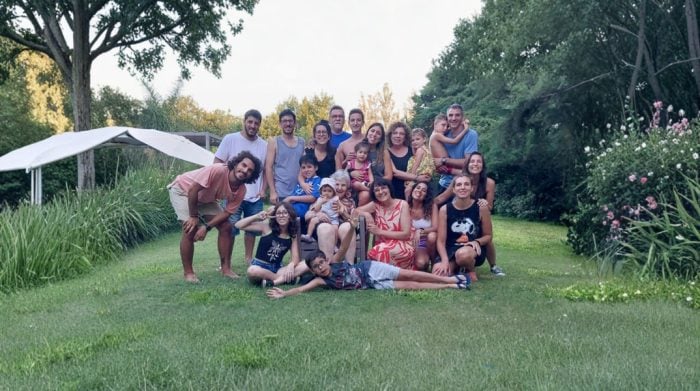
Arrival and departure greetings
When arriving:
- “¡Feliz Navidad!” (“Merry Christmas!”)
- “¡Qué lindo verlos!”* (“So nice to see you!”)
- “¿Cómo andan?”* (“How are you all doing?”)
- “Traje esto para la mesa.” (“I brought this for the table.”)
- “¿Necesitan una mano?”* (“Do you need a hand?”)
When leaving:
- “¡Gracias por todo, estuvo hermoso!” (“Thank you for everything, it was lovely!”)
- “¡Chau!”* (“Bye!”)
- “¡Nos vemos mañana!” (“See you tomorrow!”)
- “¡Feliz Navidad para todos!” (“Merry Christmas to everyone!”)
- “¡Cuidate!”* (“Take care!”)
How Do Christmas Expressions Differ Across Argentina, Spain, and Mexico?
| Expression | Argentina | Spain | Mexico |
| “How are you all?” | ¿Cómo andan? | ¿Cómo estáis? | ¿Cómo están? |
| “Bye” | Chau | Adiós | Adiós |
| “Do you need a hand?” | ¿Necesitás una mano? | ¿Necesitáis ayuda? | ¿Necesitan ayuda? |
| “So nice to see you!” | ¡Qué lindo verlos! | ¡Qué lindo veros! | ¡Qué lindo verlos! |
Toasting phrases
Midnight is the core of the Argentine celebration. These are the phrases you hear when the glasses rise and the fireworks begin:
- “¡Feliz Navidad!” (“Merry Christmas!”)
- “¡Felices fiestas!” (“Happy holidays!”)
- “¡Salud!” (“Cheers!”)
- “¡Por la familia!” (“To the family!”)
- “¡Por muchos más juntos!” (“To many more together!”)
- “¡Que el año que viene nos encuentre unidos!” (“May the coming year find us united!”)
- “¡Salud, amor y felicidad!” (“Health, love, and happiness!”)
Wishes for the season
These warm, affectionate expressions appear in WhatsApp messages, cards, and family conversations throughout December.
- “¡Que lo pases lindo con tu familia!” (“Hope you spend a lovely time with your family!”)
- “¡Que tengas unas fiestas hermosas!” (“Hope you have a beautiful holiday season!”)
- “¡Muchas bendiciones para vos y los tuyos!”* (“Many blessings for you and your loved ones!”)
Spain/Mexico: “Muchas bendiciones para ti y los tuyos.” – “vos” becomes “tú/ti”. - “¡Que se cumplan todos tus deseos!” (“May all your wishes come true!”)
- “¡Que el año que viene venga con salud y cosas buenas!” (“May the coming year bring health and good things!”)
How Is Christmas Celebrated in Argentina? – 3 Special Traditions
Christmas in Argentina doesn’t feel like the holiday most people imagine. There’s no snow, no cold nights, and no winter food. Instead, everything happens under warm skies, with families gathered outdoors and the smell of summer filling the air. These three traditions define the season so strongly that they shape the vocabulary, the timing, and even the emotional rhythm of the celebration.
Midnight on the 24th is the centre of the entire holiday. Unlike Spain, where many families open presents on the 25th or wait for the Reyes Magos (“Three Wise Men”) in January, Argentines celebrate the arrival of Christmas exactly at 12am. The moment the clock strikes twelve, everyone stands up, hugs each other, and shouts “¡Feliz Navidad!” (“Merry Christmas!”).
At the same time, the neighbourhood sky lights up with pirotecnia (“fireworks”) – cohetes (“rockets”), estrellitas (“sparklers”), and the noisy chasqui boom (“snap pops”) kids love. When I was little, adults would take us outside “a ver los fuegos artificiales” (“to watch the fireworks”), and that was always the cue for Papá Noel (“Santa Claus”) to magically appear inside with the presents.
In recent years, though, fireworks have become a point of debate. Every December, social media fills with messages like “NO A LA PIROTECNIA” (“Say no to fireworks”), reminding people how stressful the noise can be for pets, babies, older adults, and people with sensory sensitivities. As of 2025, Argentina maintains several national regulations aimed at reducing the impact of fireworks during the holiday season. Law 24.304 prohibits the sale of high-power pyrotechnic devices to anyone under 16 throughout the country, and Decree 96/2019 bans the acquisition and use of loud fireworks at events organised by the national public sector. These measures support the broader shift toward safer, quieter Christmas celebrations.
Despite this shift, Christmas Eve hasn’t lost its sparkle. Some cities and local organisations now organise silent or low-noise fireworks shows – displays that emphasise colour and visual effects rather than explosions. These shows keep the festive spirit alive while protecting the well-being of animals and the people most affected by traditional fireworks.
Even with these changes, the midnight countdown remains the emotional heartbeat of the night: the hugs, the toasts, the lights in the sky, and that familiar sense that Christmas has finally arrived.
Family gatherings and long tables outdoors
Because it’s summer, almost every family eats outdoors or with every window open. Dinner starts late – often around 9pm– and stretches into the night while the heat slowly fades. The table fills with cold dishes, fresh fruit, and whatever each relative is famous for making, and the drinks travel from hand to hand as people chat, laugh, and try to stay cool.
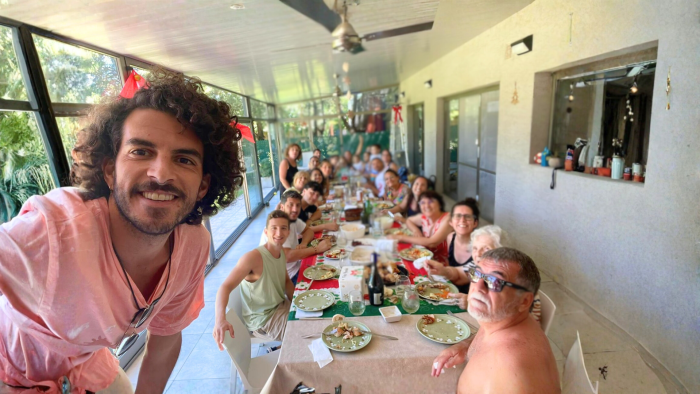
These long outdoor meals come with a very Argentine twist: nature joins the celebration whether you want it to or not. Mosquitos buzz around already at dusk, and it’s common to see mothers following their kids through the garden with a spray bottle saying “¡Ponete repelente!” (“Put on repellent!”) before the bites multiply. In big cities like Buenos Aires or Rosario, the heat brings out the infamous “cucarachas voladoras” (“flying cockroaches”), a summer visitor no one invites but everyone knows too well.
Despite these small battles with the season, the atmosphere remains warm and familiar. Someone always ends up dressing as Papá Noel for the younger kids, older cousins organise games, uncles debate football, and conversations weave across the table as everyone waits for the moment the night turns into Christmas. It’s messy, loud, a little chaotic – and completely ours.
Seasonal decorations that mix winter symbols with summer heat
Argentine decorations create a charming cultural contrast. Inside the house, the tree usually goes up on December 8th, a tradition known as armar el arbolito (“setting up the tree”). The pesebre (“nativity scene”) sits nearby, and the first wrapped presents appear under the branches as the month of December goes on.
But outside, everything reminds you it’s summer. Fairy lights hang over gardens, people eat under patio umbrellas, and families sit outside in short sleeves while inflatable snowmen melt in the heat. That blend of winter iconography and summer reality gives the Argentine Christmas its unique personality – a celebration shaped by European heritage but lived under thirty-degree nights.
How Can Spanish Teachers Introduce Latin American Christmas in the Classroom?
Teaching Christmas in Argentina works best when students experience the celebration instead of only learning vocabulary. These classroom ideas help learners understand the rhythms, traditions, and emotions of an Argentine Nochebuena, all while practising real Spanish.
Christmas-related vocabulary activities for Beginner Spanish Learners
- Photo-identification exercise
Show a picture of a typical Argentine Christmas Eve table or outdoor celebration. Ask students what looks familiar and what feels different. This naturally introduces the summer context. - Matching task with essential words
Pair words like arbolito (“Christmas tree”), fuegos artificiales (“fireworks”), or sidra (“cider”) with images.
Students then use each word in a simple personalised sentence beginning with “En mi país…” (“In my country…”). - Mini-descriptions
Learners write 2–3 short lines describing how Christmas looks in their home country compared to Argentina. This reinforces vocabulary through contrast.
Cultural comparison prompts for Intermediate Spanish learners
- Anecdote listening or reading
Share a short story about kids being taken outside “a ver los fuegos artificiales” (“to watch the fireworks”) while adults sneak presents under the tree.
Students retell the story using narrative tenses. - Guided comparison chart
Students compare:- food
- timing (midnight vs morning)
- greetings
- weather
- gift-opening traditionsThis generates strong cultural insights and lots of new vocabulary.
Christmas-themed speaking tasks for advanced learners
- Role-play: arriving at a family gathering
Students practise natural expressions such as:- “¡Feliz Navidad!” (“Merry Christmas!”)
- “¿Cómo andan?” (“How are you all doing?”)
- “¿Necesitan una mano?” (“Do you need a hand?”)
They act out arriving late, greeting each person individually, or offering to help – just as Argentines do.
- Midnight toast simulation
Learners recreate the midnight countdown and say common toasts such as “¡Salud!” (“Cheers!”) or “¡Por la familia!” (“To the family!”).
This improves rhythm, pronunciation, and fluency. - Debate or discussion topic
Use current issues like “NO A LA PIROTECNIA” (“Say no to fireworks”) or the mix of winter decorations with summer heat.
Students express opinions, propose solutions, and compare with their country’s customs.
Final Thoughts: Learning Spanish Through Real Experiences
Learning Spanish becomes much more meaningful when you connect with the people who live the language every day. Traditions like the ones I grew up with – whether they happen in Argentina, Spain, Mexico, or anywhere in the Spanish-speaking world – show students that Spanish isn’t a single culture, but a constellation of voices, accents, and ways of celebrating.
This is exactly why personalised lessons make such a difference. When you learn with a native teacher, you don’t only practise grammar or new vocabulary. You ask real questions, hear real stories, compare regional phrases, and understand why Spanish sounds and feels different depending on where it’s spoken. That human connection helps learners progress faster and remember more because every lesson becomes a lived experience, not a memorised rule.

At Language Trainers, students choose the Spanish variety they want to learn and work with a teacher who adapts each session to their needs, interests, and goals. Whether you’re looking for online courses or face-to-face Spanish lessons, our classes stay flexible, practical, and centred on authentic communication.
If you want to learn Spanish in a way that feels natural and personal, this is the best place to start. Contact Language Trainers and connect with a teacher who guides you through the language as it truly sounds in everyday life, one conversation at a time.
Frequently Asked Questions About Christmas in Latin America
Students often arrive with winter-based assumptions about Christmas, so these answers help clarify what really happens during an Argentine Nochebuena and what makes it unique.
1. How important is Christmas Eve in Latin America?
Christmas Eve is the main celebration in most Latin American countries. Families gather for a long dinner, count down to midnight together, and open presents the moment the clock strikes twelve. Christmas Day exists, but it feels slower and more relaxed – the emotional centre of the holiday is always the night of 24th.
2. What gifts do people usually exchange for Christmas in Latin America?
Children get the biggest presents, usually toys, games, or the one thing they’ve been hoping for all year. Adults tend to exchange simple or practical gifts: wine, aftershave, perfumes, socks, or the classic “regalo de abuela” (“grandma gift”) of underwear. Many families prefer doing amigo secreto (“Secret Santa”), so each adult buys one nicer present instead of many small ones.
3. What do children believe about Santa Claus in Latin America?
Latin American children believe in Papá Noel (“Santa Claus”), who arrives at midnight and leaves the presents under the tree. Adults usually send kids outside “a ver los fuegos artificiales” (“to watch the fireworks”) while someone inside places all the gifts. Every family knows the trick – and every child believes it until one day they join the adults in staging the magic for the younger ones.
4. What do you call Santa Claus in Argentine Spanish?
We call him Papá Noel, not Santa or Santa Claus. In everyday conversation, the name instantly evokes the image of presents appearing at midnight.
5. Who are “Los Reyes Magos” in Latin American traditions?
Los Reyes Magos are the Three Wise Men, figures from the Nativity story who bring gifts to children in early January. Their celebration varies across Latin America, but in many countries, they represent a second moment of gift giving after Christmas. Children often leave their shoes by the door on the night of January fifth, and some households prepare water and grass for the Wise Men’s camels. The following morning, families wake up to find presents left “by the Reyes,” keeping alive a tradition that blends religious roots with childhood excitement.
______________________________
About the author: Juan Manuel Terol is a qualified Spanish and English instructor with over 15 years of teaching experience across Argentina, Spain, and international online platforms. He holds a Bachelor’s Degree in Translation and a Postgraduate Degree in University Teaching. As Language Trainers’ Spanish Language Ambassador, Juan Manuel focuses on helping students build fluency and confidence through customised lessons that integrate cultural context and real-world communication. You can read more about his amazing work on his Spanish Language Ambassador profile.