
Saying that désolé(e), pardon and excusez-moi are the most common ways to say sorry in French is right, but it does not tell you which one will actually sound natural in a particular situation. Knowing how to apologise effectively in French means understanding when a quick pardon is enough, when désolé(e) carries more genuine regret, and when the more formal excusez-moi is the better choice.
That difference becomes even more noticeable once you start using French with other people. You would not normally apologise to a close friend in exactly the same way you would to a client, just as bumping into someone on the street does not call for the same language as making a serious mistake at work. French also makes you think about tu and vous, so the relationship between speakers is built into the apology itself.
Learning a few different ways to apologise gives you much more freedom to respond naturally instead of reaching for the same phrase every time.
In this article, we will start with professional situations, then look at the everyday expressions French speakers use with colleagues, friends and partners.
→Sign Up Now: Free Trial French Lesson With a Native Teacher!←
How to Apologise Professionally in French
If you are apologising at work, the first thing to consider is usually not the vocabulary but the person you are speaking to. Do you normally address them with tu or vous? Is this a colleague you know well, a manager, a client or someone you have never met before? Those details immediately narrow down which apology will sound appropriate.
The seriousness of the problem matters just as much. If you are five minutes late to an internal meeting, a short apology may be perfectly adequate. If you have sent incorrect information to a client or caused a delay for another team, you will probably want to be more explicit about what happened and what you are doing to correct it.
French gives you plenty of room to adjust that level of formality. Je suis désolé(e) is useful in many situations, but phrases such as Je vous prie de m’excuser and Je vous présente mes excuses sound more deliberate and professional. The aim is not to make every workplace apology sound solemn. It is to choose wording that feels proportionate to the situation.
Formal French Apologies for Work and Business
When you are writing to a client, speaking to a manager or dealing with someone you address as vous, these are some of the most useful apologies to know. Some are suitable for everyday professional problems, while others are better kept for situations where you need to sound particularly formal.
- Je vous prie de m’excuser pour ce retard
Translation: Please accept my apologies for this delay.
When to use: Use this when a response, task, delivery or meeting has been delayed and you want to sound formal and respectful.
Sample sentence:
Je vous prie de m’excuser pour ce retard. Je vous enverrai le rapport complet avant la fin de la journée.
Translation: Please accept my apologies for this delay. I will send you the complete report before the end of the day. - Veuillez m’excuser pour cette erreur
Translation: Please excuse me for this mistake.
When to use: Suitable for professional correspondence when you need to acknowledge a clear mistake without sounding overly emotional.
Sample sentence:
Veuillez m’excuser pour cette erreur. La version corrigée du document est jointe à ce message.
Translation: Please excuse me for this mistake. The corrected version of the document is attached to this message. - Je suis désolé(e) pour ce malentendu
Translation: I am sorry for this misunderstanding.
When to use: Use this after unclear communication, conflicting information or a misunderstanding with a colleague or client.
Sample sentence:
Je suis désolé pour ce malentendu. Je pensais que la réunion avait été déplacée à jeudi.
Translation: I am sorry for this misunderstanding. I thought the meeting had been moved to Thursday. - Je vous présente mes excuses pour la confusion occasionnée
Translation: I apologise for the confusion caused.
When to use: A more formal expression for situations where your mistake created inconvenience or uncertainty for another person.
Sample sentence:
Je vous présente mes excuses pour la confusion occasionnée. Les nouvelles instructions sont désormais confirmées.
Translation: I apologise for the confusion caused. The new instructions have now been confirmed. - Toutes mes excuses pour cette réponse tardive
Translation: My apologies for this late reply.
When to use: Useful in professional emails when you are responding later than expected. It is polite but slightly less formal than Je vous prie de m’excuser.
Sample sentence:
Toutes mes excuses pour cette réponse tardive. J’avais besoin de vérifier certaines informations avant de vous répondre.
Translation: My apologies for this late reply. I needed to check some information before replying to you. - Je regrette sincèrement les désagréments occasionnés
Translation: I sincerely regret the inconvenience caused.
When to use: Best for more serious professional situations where the problem has affected the other person directly.
Sample sentence:
Je regrette sincèrement les désagréments occasionnés et je comprends les difficultés que ce retard a pu créer.
Translation: I sincerely regret the inconvenience caused and understand the difficulties this delay may have created.
Informal French Apologies Between Colleagues
French at work is not always formal. If you and a colleague normally use tu, a very polished expression such as Je vous présente mes excuses would probably sound strangely distant. In that kind of relationship, désolé(e), excuse-moi and pardon are much more natural.
That does not mean every mistake can be brushed off with a quick désolé. If you forgot to send something important or created extra work for a teammate, adding what went wrong or what you are going to do next makes the apology sound more sincere.
- Désolé(e), c’est ma faute
Translation: Sorry, it’s my fault.
When to use: Use this when you want to take direct responsibility for a mistake with a colleague.
Sample sentence:
Désolé, c’est ma faute. Je t’ai envoyé l’ancienne version du document.
Translation: Sorry, it’s my fault. I sent you the old version of the document. - Excuse-moi, j’ai complètement oublié
Translation: Sorry, I completely forgot.
When to use: Useful when you forgot a task, meeting, message or something you had promised to do.
Sample sentence:
Excuse-moi, j’ai complètement oublié de t’envoyer les chiffres ce matin.
Translation: Sorry, I completely forgot to send you the figures this morning. - Désolé(e) pour le retard
Translation: Sorry for being late / Sorry for the delay.
When to use: A very common informal workplace apology for arriving late or completing something later than expected.
Sample sentence:
Désolé pour le retard, la réunion précédente a duré plus longtemps que prévu.
Translation: Sorry I’m late, the previous meeting lasted longer than expected. - Pardon, je t’ai coupé
Translation: Sorry, I interrupted you.
When to use: Use this after accidentally speaking over a colleague during a conversation or meeting.
Sample sentence:
Pardon, je t’ai coupé. Vas-y, termine ce que tu voulais dire.
Translation: Sorry, I interrupted you. Go ahead, finish what you wanted to say. - Désolé(e), je n’avais pas vu ton message
Translation: Sorry, I hadn’t seen your message.
When to use: Natural for chats, internal messaging platforms or informal emails between colleagues.
Sample sentence:
Désolée, je n’avais pas vu ton message. Je regarde ça tout de suite.
Translation: Sorry, I hadn’t seen your message. I’ll look at it right away. - Excuse-moi, je m’en occupe tout de suite
Translation: Sorry, I’ll take care of it right away.
When to use: Useful when the apology needs to be followed by immediate action.
Sample sentence:
Excuse-moi, je m’en occupe tout de suite et je t’envoie la nouvelle version dans quelques minutes.
Translation: Sorry, I’ll take care of it right away and send you the new version in a few minutes.
Pardon, Désolé or Excusez-moi: Which French Apology Should You Use?
This is where many learners hesitate. Pardon, désolé(e) and excusez-moi can all be translated as some version of “sorry” or “excuse me”, but native speakers do not simply swap one for another at random. Each one tends to fit a different kind of moment.
The easiest way to remember the difference is to think about what you are actually doing. Are you dealing with a tiny social inconvenience? Are you expressing genuine regret? Or are you politely asking someone to excuse an interruption or mistake?

When to Use Pardon in French
Pardon is the one I would teach first for those tiny everyday moments when something happens and you need an apology immediately. You bump into someone, step in their way, speak over them or realise you did not hear what they said. None of those situations usually needs a long explanation.
It is also one of the most useful little words to have ready when you are out and about in a French-speaking place. If someone says something you did not catch, a questioning Pardon ? is an easy way to ask them to repeat it.
- Pardon !
Translation: Sorry! / Excuse me!
When to use: After bumping into someone or causing a minor inconvenience. - Pardon, je ne vous avais pas vu.
Translation: Sorry, I hadn’t seen you.
When to use: If you accidentally get in someone’s way. - Pardon ?
Translation: Sorry? / Pardon?
When to use: When you want someone to repeat what they just said.
The limitation of pardon is that it can feel too light once the mistake has real consequences. If someone is genuinely upset or you have caused a significant problem, you will usually want something stronger.
When to Say Désolé or Désolée
If pardon often deals with a brief social mishap, désolé(e) moves closer to genuine regret. This is the expression you are more likely to choose when you actually feel sorry about something that happened, whether you were late, forgot something important or hurt someone’s feelings.
One small detail learners need to remember is that the written form changes according to the speaker:
- désolé for a male speaker
- désolée for a female speaker
You will not normally hear a difference in pronunciation, so this is mainly something to pay attention to when writing.
- Je suis désolé pour le retard.
Translation: I’m sorry for the delay. - Je suis désolée de t’avoir blessé.
Translation: I’m sorry I hurt you. - Désolé, j’ai oublié de te répondre.
Translation: Sorry, I forgot to reply to you.
When a plain désolé(e) feels too weak, adding vraiment or sincèrement lets you show that the apology is more serious: je suis vraiment désolé(e) or je suis sincèrement désolé(e).
When to Use Excusez-moi and Excuse-moi
The nice thing about excusez-moi and excuse-moi is that the grammar tells you something about the relationship straight away. Excusez-moi goes with vous, while excuse-moi goes with tu.
That means excusez-moi is what you would normally choose with a stranger, a client, a senior colleague or anyone else you address formally. Excuse-moi belongs with friends, relatives and people with whom you already use tu.
- Excusez-moi, pourriez-vous m’aider ?
Translation: Excuse me, could you help me? - Excusez-moi pour ce retard.
Translation: Please excuse me for this delay. - Excuse-moi, je t’ai interrompu.
Translation: Sorry, I interrupted you. - Excuse-moi, je n’avais pas compris.
Translation: Sorry, I hadn’t understood.
In practice, excusez-moi often feels a little more deliberate and polite than a quick pardon, while désolé(e) puts more emphasis on the fact that you genuinely regret what happened. Once you start listening for that difference, the three expressions become much easier to separate.
How to Apologise to Your Partner in French
With a partner, knowing the dictionary translation of “sorry” is the easy part. What is harder is choosing words that fit what actually happened. Forgetting to pick something up on the way home is not the same as saying something deeply hurtful, and the apology should not sound the same either.
French gives you quite a few ways to make an apology warmer or more serious without turning it into a dramatic speech. You can strengthen je suis désolé(e) with vraiment or sincèrement, admit responsibility with c’est ma faute, or reflect on what you should have done differently with j’aurais dû…. The useful skill is learning how much weight each phrase carries.
Gentle French Apologies for Everyday Relationship Problems
For the little arguments and misunderstandings that happen in any relationship, a good apology usually sounds better when it is specific. Instead of saying only “sorry”, you can say what you regret: your reaction, your tone, your impatience or the way you phrased something.
- Désolé(e), je ne voulais pas te blesser
Translation: Sorry, I didn’t mean to hurt you.
When to use: After saying something insensitive or upsetting your partner unintentionally.
Sample sentence:
Désolée, je ne voulais pas te blesser. J’ai parlé trop vite sans réfléchir.
Translation: Sorry, I didn’t mean to hurt you. I spoke too quickly without thinking. - Excuse-moi, j’ai mal réagi
Translation: Sorry, I reacted badly.
When to use: After becoming irritated or responding too strongly during a disagreement.
Sample sentence:
Excuse-moi, j’ai mal réagi. Je comprends que tu essayais seulement de m’expliquer ce qui s’était passé.
Translation: Sorry, I reacted badly. I understand that you were only trying to explain what happened. - Je suis désolé(e), j’ai exagéré
Translation: I’m sorry, I overreacted.
When to use: When the problem itself was relatively small but your reaction was disproportionate.
Sample sentence:
Je suis désolé, j’ai exagéré. Ce n’était pas aussi grave que je le pensais sur le moment.
Translation: I’m sorry, I overreacted. It wasn’t as serious as I thought at the time. - Pardon pour mon ton
Translation: Sorry about my tone.
When to use: When what you said may have been reasonable but the way you said it sounded cold, impatient or rude.
Sample sentence:
Pardon pour mon ton. J’étais stressé, mais je n’aurais pas dû te parler comme ça.
Translation: Sorry about my tone. I was stressed, but I shouldn’t have spoken to you like that. - J’aurais dû le dire autrement
Translation: I should have said it differently.
When to use: When the problem was mainly the way you expressed yourself.
Sample sentence:
J’aurais dû le dire autrement. Je comprends pourquoi tu l’as mal pris.
Translation: I should have said it differently. I understand why you took it badly. - Excuse-moi, je n’ai pas été assez patient(e)
Translation: Sorry, I wasn’t patient enough.
When to use: After becoming frustrated or failing to listen properly.
Sample sentence:
Excuse-moi, je n’ai pas été assez patiente. J’aurais dû te laisser finir.
Translation: Sorry, I wasn’t patient enough. I should have let you finish.
Sincere French Apologies for More Serious Relationship Problems
Once the problem is more serious, a simple désolé(e) can start to feel incomplete. You may need language that says not only “I regret this” but also “I understand what I did” and “I know that fixing it may take time”.
That is where phrases about responsibility, trust and making amends become useful. They are stronger expressions, so they should sound like they belong to the situation rather than something you have memorised for effect.
- Je suis sincèrement désolé(e) de t’avoir fait du mal
Translation: I am sincerely sorry for hurting you.
When to use: When your words or actions caused significant emotional pain.
Sample sentence:
Je suis sincèrement désolée de t’avoir fait du mal. Je comprends que ce que j’ai fait t’a profondément blessé.
Translation: I am sincerely sorry for hurting you. I understand that what I did hurt you deeply. - J’assume la responsabilité de ce qui s’est passé
Translation: I take responsibility for what happened.
When to use: When you want to make it clear that you are not blaming circumstances or the other person.
Sample sentence:
J’assume la responsabilité de ce qui s’est passé. Je ne veux pas chercher d’excuses.
Translation: I take responsibility for what happened. I don’t want to make excuses. - Je n’ai aucune excuse pour ce que j’ai fait
Translation: I have no excuse for what I did.
When to use: When the mistake was serious and you want to acknowledge it without minimising it.
Sample sentence:
Je n’ai aucune excuse pour ce que j’ai fait. Je comprends que j’ai abîmé ta confiance.
Translation: I have no excuse for what I did. I understand that I damaged your trust. - Je comprends que tu sois blessé(e)
Translation: I understand that you’re hurt.
When to use: When you want to acknowledge your partner’s feelings rather than focusing only on your own regret.
Sample sentence:
Je comprends que tu sois blessée et que tu aies besoin de temps.
Translation: I understand that you’re hurt and that you need time. - Je veux regagner ta confiance
Translation: I want to regain your trust.
When to use: After a serious mistake or repeated problem that has affected trust.
Sample sentence:
Je veux regagner ta confiance, même si je sais que cela prendra du temps.
Translation: I want to regain your trust, even though I know it will take time. - Dis-moi ce que je peux faire pour me faire pardonner
Translation: Tell me what I can do to make it up to you.
When to use: When you want the apology to include an attempt to repair the situation.
Sample sentence:
Dis-moi ce que je peux faire pour me faire pardonner. Je ne veux pas que mes excuses restent seulement des mots.
Translation: Tell me what I can do to make it up to you. I don’t want my apology to be just words. - Je sais que ça prendra du temps
Translation: I know it will take time.
When to use: When forgiveness or reconciliation is unlikely to happen immediately.
Sample sentence:
Je sais que ça prendra du temps et je ne m’attends pas à ce que tout redevienne normal tout de suite.
Translation: I know it will take time, and I don’t expect everything to go back to normal straight away.
How to Write an Apology Email or Message in French
The French you use to apologise in writing changes enormously depending on who is going to read it. A client who has been inconvenienced by a mistake will expect something quite different from a friend wondering why you never replied to their message. The basic idea is the same, but the vocabulary, pronouns and amount of explanation all change.
In a professional email, vous and more formal expressions such as Je vous prie de m’excuser, Veuillez accepter mes excuses or Je vous présente mes excuses are useful tools. With a friend, partner or close colleague, the same wording can sound stiff. Désolé(e) or excuse-moi will usually fit better.
What I would encourage learners to avoid is treating an apology as a formula you can paste into any message. If the issue is serious enough to require an email, say what happened. If there is something you can do about it, say that too. A clear apology followed by a practical next step usually feels much more genuine than an elaborate expression of regret with no solution attached.
How to Write a Formal Apology Email in French
A formal French apology email does not need to be long, but it does need to feel complete. A useful structure is:
- Identify the problem directly.
- Apologise in appropriately formal language.
- Acknowledge the inconvenience or consequences where relevant.
- Explain what has already been done, or what will happen next.
- Close politely and professionally.
Think of that structure as a guide rather than a rigid template. A minor error may need only a few lines, while a more serious problem may require more explanation. What matters is that the reader does not have to search through the message to understand what happened or how you plan to deal with it.
Sample French Apology Email 1: Apologising for Sending Confidential Information to the Wrong Person
French
Objet : Excuses concernant l’envoi d’un document par erreur
Madame Dupont,
Je vous présente mes sincères excuses pour vous avoir envoyé hier par erreur un document qui ne vous était pas destiné.
Je me suis rendu compte de cette erreur peu après l’envoi et j’ai immédiatement signalé la situation en interne. Les mesures nécessaires ont déjà été prises afin de documenter l’incident et d’éviter qu’une situation similaire ne se reproduise.
Je regrette sincèrement cette erreur et comprends l’importance de traiter ce type d’information avec la plus grande attention. Je vous serais reconnaissant(e) de bien vouloir supprimer le message ainsi que la pièce jointe.
Je vous remercie par avance de votre compréhension et vous renouvelle mes excuses.
Cordialement,
[Nom]
English translation
Subject: Apology regarding a document sent by mistake
Dear Ms Dupont,
I sincerely apologise for accidentally sending you a document yesterday that was not intended for you.
I realised the mistake shortly after sending it and immediately reported the situation internally. The necessary steps have already been taken to document the incident and prevent a similar situation from happening again.
I sincerely regret this mistake and understand the importance of handling this kind of information with the greatest care. I would be grateful if you could delete the message and its attachment.
Thank you in advance for your understanding, and please accept my apologies once again.
Kind regards,
[Name]
Sample French Apology Email 2: Apologising for a Professional or Cultural Misunderstanding
French
Objet : Excuses à la suite de notre rencontre d’hier
Monsieur Bernard,
Je tiens à vous présenter mes excuses pour le malentendu survenu lors de notre rencontre d’hier.
Ce n’est qu’après notre échange que j’ai compris que je n’avais pas respecté une convention importante dans ce contexte professionnel. Je tiens à vous assurer qu’il n’était absolument pas dans mon intention de paraître impoli(e) ou irrespectueux(se).
J’ai beaucoup apprécié notre rencontre et je regrette que mon comportement ait pu donner une mauvaise impression. Je serai plus attentif(ve) à ce type de détail lors de nos prochains échanges.
Je vous remercie pour votre compréhension et vous prie une nouvelle fois de bien vouloir accepter mes excuses.
Cordialement,
[Nom]
English translation
Subject: Apology following our meeting yesterday
Dear Mr Bernard,
I would like to apologise for the misunderstanding that occurred during our meeting yesterday.
It was only after our conversation that I realised I had failed to observe an important convention in that professional context. I would like to assure you that it was absolutely not my intention to appear rude or disrespectful.
I greatly appreciated our meeting and regret that my behaviour may have created the wrong impression. I will pay closer attention to this type of detail in our future interactions.
Thank you for your understanding, and please accept my apologies once again.
Kind regards,
[Name]
Casual French Apology Messages for Texts and Chats
Texts are where French apologies usually become much shorter and more spontaneous. You do not need a formal opening because you replied three hours late or forgot that you were supposed to call someone. What sounds natural is often a short désolé(e), pardon or excuse-moi, followed by a quick explanation.
A little context can still make a big difference when it comes to French phone vocabulary. Compare a bare désolé with Désolé, je n’avais pas vu ton message. Both are correct, but the second sounds like a real response to a real situation.
- Désolé(e) pour la réponse tardive !
Translation: Sorry for the late reply!
When to use: When you took longer than expected to answer a message.
Sample sentence:
Désolée pour la réponse tardive ! J’ai eu une journée complètement folle.
Translation: Sorry for the late reply! I’ve had a completely crazy day. - Désolé(e), je dois annuler ce soir.
Translation: Sorry, I have to cancel tonight.
When to use: When cancelling plans with a friend or someone close.
Sample sentence:
Désolé, je dois annuler ce soir. Je ne me sens vraiment pas bien.
Translation: Sorry, I have to cancel tonight. I’m really not feeling well. - Excuse-moi, j’avais complètement oublié.
Translation: Sorry, I’d completely forgotten.
When to use: After forgetting a plan, task or promise.
Sample sentence:
Excuse-moi, j’avais complètement oublié qu’on devait s’appeler ce matin.
Translation: Sorry, I’d completely forgotten we were supposed to call each other this morning. - Pardon, ce n’est pas ce que je voulais dire.
Translation: Sorry, that’s not what I meant.
When to use: After a misunderstanding or when a message sounded harsher than intended.
Sample sentence:
Pardon, ce n’est pas ce que je voulais dire. Mon message était maladroit.
Translation: Sorry, that’s not what I meant. My message was badly worded. - Désolé(e), je ne voulais pas être blessant(e).
Translation: Sorry, I didn’t mean to be hurtful.
When to use: After accidentally offending someone.
Sample sentence:
Désolée, je ne voulais pas être blessante. Je comprends que mon commentaire ait pu te vexer.
Translation: Sorry, I didn’t mean to be hurtful. I understand that my comment may have upset you. - Je suis vraiment désolé(e). Je me rattraperai, promis.
Translation: I’m really sorry. I’ll make it up to you, I promise.
When to use: After letting down a friend or partner in a relatively minor situation.
Sample sentence:
Je suis vraiment désolé. Je me rattraperai, promis. La prochaine fois, c’est moi qui organise tout.
Translation: I’m really sorry. I’ll make it up to you, I promise. Next time, I’ll organise everything.
How to Respond When Someone Apologises in French
An apology is a two-person exchange, so learning to say désolé(e) is only half the job. You also need to recognise the expressions people use when they want to say “don’t worry about it”, “I accept your apology” or, sometimes, “I hear you, but I’m not ready to move on yet”.
For a small mistake, the answer may be only two or three words. For something more serious, the response can carry just as much emotional weight as the apology itself.
Polite Ways to Accept an Apology in French
- Ce n’est pas grave.
Translation: It’s not serious / It’s alright.
When to use: One of the most common responses to a minor mistake or inconvenience.
Sample sentence:
Ce n’est pas grave, ça peut arriver à tout le monde.
Translation: It’s alright, it can happen to anyone. - Pas de problème.
Translation: No problem.
When to use: Very natural in informal and neutral situations when you want to reassure someone quickly.
Sample sentence:
Pas de problème, merci de m’avoir prévenu.
Translation: No problem, thanks for letting me know. - Ne vous inquiétez pas.
Translation: Don’t worry.
When to use: A polite response with someone you address as vous, particularly after a small professional or social mistake.
Sample sentence:
Ne vous inquiétez pas, nous avons encore suffisamment de temps.
Translation: Don’t worry, we still have enough time. - Ne t’inquiète pas.
Translation: Don’t worry.
When to use: The informal tu version, suitable for friends, relatives and close colleagues.
Sample sentence:
Ne t’inquiète pas, je comprends pourquoi tu as dû annuler.
Translation: Don’t worry, I understand why you had to cancel. - J’accepte tes excuses.
Translation: I accept your apology.
When to use: More explicit than ce n’est pas grave and appropriate when the situation was more serious.
Sample sentence:
J’accepte tes excuses et j’apprécie que tu aies été honnête avec moi.
Translation: I accept your apology and appreciate that you were honest with me. - Je vous remercie pour vos excuses.
Translation: Thank you for your apology.
When to use: A more measured or formal way to acknowledge an apology without sounding overly familiar.
Sample sentence:
Je vous remercie pour vos excuses et pour les mesures que vous avez prises pour résoudre le problème.
Translation: Thank you for your apology and for the steps you have taken to resolve the problem.
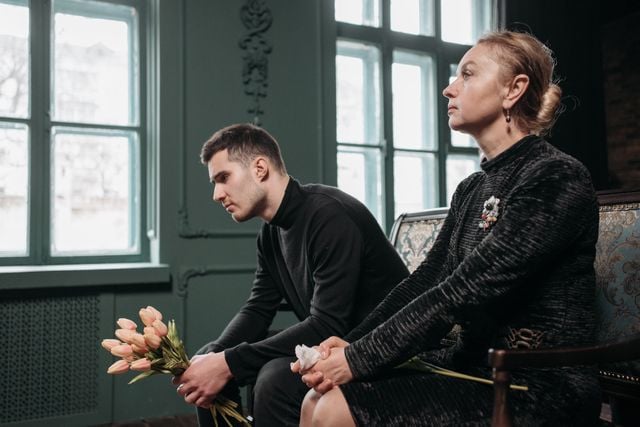
How to Respond When You Are Not Ready to Forgive
Not every apology ends with ce n’est pas grave. Sometimes the other person has said sorry and you appreciate that, but you are still hurt, angry or simply not ready to decide what happens next.
French gives you ways to say that without turning the response into another argument. You can acknowledge the apology, ask for time or explain that the problem still feels unresolved.
- J’ai besoin d’un peu de temps.
Translation: I need a little time.
When to use: When you have heard the apology but are not ready to move on immediately.
Sample sentence:
J’ai besoin d’un peu de temps pour réfléchir à tout ça.
Translation: I need a little time to think about all of this. - Je comprends tes excuses, mais je suis encore blessé(e).
Translation: I understand your apology, but I’m still hurt.
When to use: In personal situations where you want to acknowledge the apology without pretending that everything is fine.
Sample sentence:
Je comprends tes excuses, mais je suis encore blessée et j’ai besoin de temps.
Translation: I understand your apology, but I’m still hurt and I need time. - Merci de t’être excusé(e), mais ce n’est pas encore réglé pour moi.
Translation: Thank you for apologising, but it isn’t resolved for me yet.
When to use: When you appreciate the apology but still need to discuss or process the issue.
Sample sentence:
Merci de t’être excusé, mais ce n’est pas encore réglé pour moi. J’aimerais qu’on en reparle.
Translation: Thank you for apologising, but it isn’t resolved for me yet. I’d like us to talk about it again. - Parlons-en plus tard.
Translation: Let’s talk about it later.
When to use: When emotions are still too strong for a useful conversation.
Sample sentence:
Parlons-en plus tard, quand on sera tous les deux plus calmes.
Translation: Let’s talk about it later, when we’re both calmer. - Je ne suis pas encore prêt(e) à passer à autre chose.
Translation: I’m not ready to move on yet.
When to use: For a more serious situation where forgiveness or reconciliation will take time.
Sample sentence:
Je ne suis pas encore prête à passer à autre chose, même si j’entends tes excuses.
Translation: I’m not ready to move on yet, even though I hear your apology.
How Personalised French Lessons Can Improve Your Conversational Skills
You can memorise every phrase in this article and still hesitate the first time someone looks at you waiting for a response. That is normal. Real conversation asks you to make several decisions at once: tu or vous? Pardon or désolé? Formal or friendly? Is this phrase too strong, or not strong enough?
Those are exactly the kinds of choices that become easier when you practise French with another person. At Language Trainers, one-to-one lessons can be built around the situations a learner genuinely expects to face. If French is important for your job, that might mean practising client conversations, workplace misunderstandings and formal emails. If your goal is everyday communication, your teacher can spend more time on social situations, travel, relationships and natural spoken French.
A teacher can also catch something a vocabulary list cannot: a sentence may be grammatically correct and still sound oddly formal, too blunt or simply unlike something a French speaker would normally say in that situation. Being able to try the phrase, hear feedback and say it again differently is one of the fastest ways to develop a better feel for tone and register.
Hannah Owen, who took French lessons in Southampton for six months, described how her trainer adapted the course to what she actually needed professionally:
“My trainer, Pasquale, was highly skilled in teaching; he planned the lessons and homework extremely well to suit me and the subjects I needed to grasp for my job.”
That is the advantage of personalised training. You are not practising apologies because they happen to appear in Unit 7 of a textbook. You are working on the language, tone and conversational skills that will actually be useful when you need to speak.
If you want to become more confident using French in real conversations, contact Language Trainers to discuss your level, objectives and preferred schedule. We can build a personalised French course around the situations in which you actually need to communicate.
→Sign Up Now: Free Trial French Lesson With a Native Teacher!←
Common Questions About Saying Sorry in French
1. How Do You Say “I’m Sorry” in French?
The most common way to say “I’m sorry” in French is je suis désolé for a male speaker or je suis désolée for a female speaker. In everyday conversation, the shorter désolé(e) is also very common. For stronger regret, you can say je suis vraiment désolé(e) or je suis sincèrement désolé(e).
2. How Do You Say “Excuse Me” in French?
The most common options are excusez-moi, excuse-moi and pardon. Use excusez-moi with people you address as vous, such as strangers or clients, and excuse-moi with someone you address as tu. Pardon is especially common for small interruptions, bumping into someone or asking a person to repeat something.
3. What Is the Difference Between Pardon and Désolé in French?
Pardon is usually used for minor, immediate situations, while désolé(e) expresses more genuine regret. You might say pardon if you accidentally interrupt someone or get in their way, but désolé(e) if you arrive late, forget something important or upset someone. The difference is mainly one of seriousness and emotional weight.
4. How Do You Reply When Someone Says Sorry in French?
For small mistakes, common replies include ce n’est pas grave (“it’s alright”), pas de problème (“no problem”) and ne vous inquiétez pas (“don’t worry”). For more serious apologies, you can say j’accepte tes excuses (“I accept your apology”). If you still need time, j’ai besoin d’un peu de temps works well.