
Do Turkish Women Follow Football More Than Outsiders Think?
 Posted by
 Women are an important part of football culture in Turkey, although their involvement is often overlooked by foreign visitors. Some women follow clubs such as Beşiktaş, Fenerbahçe, Galatasaray, and Trabzonspor closely, while others mainly watch derbies, national-team games, and major tournaments such as the World Cup. Their connection to football often develops through family loyalty, social gatherings, workplace conversations, and shared national excitement. Women’s professional football in Turkey still faces inequality, but women already participate widely as supporters, viewers, commentators, and members of football-loving families. Understanding this broader involvement gives a more accurate picture of what football means in Turkish society.
From the outside, football in Turkey can still look like a mainly male space: men in cafés watching derby matches, men arguing about referees, and men wearing club scarves in the streets. That world exists, of course, but it is only one part of the story. Football also lives in family homes, neighbourhood conversations, school memories, workplace jokes, national celebrations, and the emotional lives of many women.
This becomes especially clear around the World Cup. Even people who do not follow the whole football season can feel the excitement when a major international tournament begins. Matches become social events. Families arrange their evenings around kick-off times. Friends gather to watch together. People who normally support rival Turkish clubs suddenly react to the same goals, the same missed chances, and the same national hopes. Football in Turkey is shaped by weekly club loyalty, but it also creates a shared emotional space during major international competitions.
I would not describe myself as someone who follows the entire football season closely. I do not watch every match or know every detail of the league table. But I enjoy important games, especially when I watch them with friends or family. For me, football is powerful because of the social atmosphere it creates. It brings people together, gives everyone something to react to, and turns an ordinary evening into a shared emotional experience.
My family has always supported Beşiktaş, one of Istanbul’s major football clubs and one of the traditional giants of Turkish football. In Turkey, people often inherit their club from their family. You may grow up hearing one club name again and again, seeing the same colours at home, and feeling close to a team before you fully understand tactics, league tables, or football history. In my case, Beşiktaş is the club I feel closest to because it has always been part of my family environment.
Women and football in Turkey therefore cannot be understood only through stadium attendance or professional statistics. Women’s football as a professional field still faces serious challenges, but women’s connection to football culture is much broader. Many women take part as supporters, viewers, commentators, and emotional witnesses to the game. They may not always describe themselves as football fans, but they often know exactly what a derby means, what a World Cup match feels like, and why a club or national team can matter so much.
→Sign Up Now: Free Trial Turkish Lesson With a Native Teacher!←
Why Football in Turkey Is More Than Just a Sport
In Turkey, football is not only something people watch. It is a social language. It gives people a way to talk about loyalty, pride, disappointment, belonging, rivalry, and hope. Even people who are not regular football followers often know the emotional weight of a big match. They know when there is a derby, which is a match between major rivals. They know when the national team is playing. They know when a family member will be impossible to talk to after a painful defeat.
This is why football often enters everyday life in Turkey. It appears in jokes, family arguments, workplace conversations, school memories, neighbourhood cafés, social media posts, and group chats. The match itself may last ninety minutes, but the conversation around it can last for days. People discuss the referee, the coach, the missed goal, the transfer rumours, the atmosphere in the stadium, and the behaviour of the supporters.
For Turkish learners, this matters because football vocabulary is also cultural vocabulary. Words such as taraftar [committed supporter], seyirci [spectator], derbi [derby], takım [team], and forma [football shirt / jersey] are not only words for the game. They are connected to identity and emotion. To understand Turkish football language, learners need to understand the social world behind it.
Why Turkish Football Creates Family, Identity, and Belonging
One of the most important things to understand about football in Turkey is that club identity can feel personal because it is often connected to family identity. People may support Beşiktaş, Fenerbahçe, Galatasaray, Trabzonspor, or another club because of where they come from, who raised them, who they watched matches with, or which team was loved in the household. Beşiktaş, Fenerbahçe, and Galatasaray are three of Istanbul’s biggest clubs, while Trabzonspor, from the Black Sea city of Trabzon, is another major force in Turkish football culture.
This is my own experience with Beşiktaş. Because my family supports the club, Beşiktaş is the team I naturally feel closest to. It is not only about watching the team play. It is also about memory, atmosphere, and belonging. When a club is part of your family environment, it becomes one of the small cultural inheritances you grow up with, like certain foods, songs, expressions, or holiday traditions.
This also explains why women can be deeply connected to football even if they do not follow every match. A woman may not know every player in the squad, but she may still feel happy when the family’s team wins, tense before a derby, or emotionally involved when everyone gathers to watch an important game. Football becomes part of the shared emotional calendar of the family.
The social side is very important. Watching a match together creates a special kind of unity. People comment, react, complain, celebrate, and suffer together. In Turkey, this collective emotion is one of the reasons football remains so powerful. It gives people a shared script: everyone knows when to shout, when to worry, when to tease, and when to say, “This is our year.”
Why Many Turkish People Inherit Their Club from Their Family
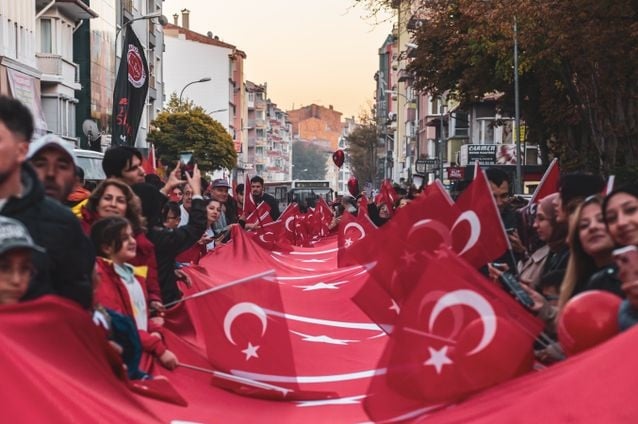
In many Turkish families, supporting a football club begins before a child has any real opinion about football. A baby might receive a tiny club shirt. A child might hear family members talk about “our team”. Relatives may joke about whether the child will grow up Beşiktaşlı [a Beşiktaş supporter], Fenerbahçeli [a Fenerbahçe supporter], Galatasaraylı [a Galatasaray supporter], or Trabzonsporlu [a Trabzonspor supporter]. These words are more than labels. They describe belonging.
Of course, people can choose a different club later, and many do. But family influence is very strong. Supporting a club can become part of the story people tell about who they are and where they come from. It can also create playful rivalries inside families. One person supports Beşiktaş, another supports Fenerbahçe, another supports Galatasaray, and suddenly a match becomes a family event.
This is one reason I think foreign learners should be careful not to treat football in Turkey as only a hobby. For many people, it is connected to childhood, family loyalty, city identity, humour, and emotion. Asking someone “Which team do you support?” can open a much bigger conversation than a learner expects. The answer may include family history, memories of watching matches, favourite players, painful defeats, or jokes about rival clubs.
Are Turkish Women Passionate About Football?
Yes, Turkish women can be very passionate about football, but that passion does not always look the same from the outside. Some women follow the league closely, go to stadiums, know the players, and have very strong opinions about tactics and transfers. Others may not watch football every week, but they become emotionally involved in important matches, derbies, and national games. Both forms of participation matter.
This is an important distinction. Passion does not always mean watching every match. In Turkey, football passion can also mean caring because your family cares, because your friends are watching, because the national team is playing, or because the match has become a social occasion. It can mean knowing when to celebrate, when to tease a rival supporter, and when not to speak to someone after their team loses.
I have seen this many times in ordinary social life. Women who would not describe themselves as football experts still understand the emotional power of the game. They know which matches matter. They recognise the tension before a derby. They understand why a victory can change the mood of a room. Football is part of the cultural background, even for people who do not organise their whole week around it.
Why Foreigners Often Misunderstand Turkish Women and Football
Foreigners sometimes assume that football in Turkey is mainly a male world. This assumption is understandable if their image of Turkish football comes mostly from stadium crowds, intense fan groups, or men watching matches in public places. But Turkish social life is wider than what is visible in the stadium.
Many women participate in football culture through the home, family gatherings, friendship groups, workplace conversations, and national matches. They may watch with relatives, comment on the game, support the family club, or follow the emotional rhythm of the season without necessarily presenting themselves as football specialists. This is why it is too simple to ask only, “Do women go to matches?” The better question is: “How does football enter women’s social lives?”
There is also a difference between professional women’s football and women’s relationship with football culture. Women’s football in Turkey has developed over time, with a women’s national team, leagues, youth categories, and clubs, but it still faces structural challenges. At the same time, women as supporters and viewers have long been part of football’s emotional world. These two realities can exist together: women’s professional football still needs more investment and visibility, while women’s cultural connection to football is already much stronger than many outsiders imagine.
How Women Take Part in Match-Day Emotion, Family Rivalries, and Big Football Games
Match-day emotion in Turkey is not limited to the people in the stadium. It can fill a living room, a restaurant, a group chat, or a family visit. Women take part in that atmosphere in many different ways. Some watch carefully and analyse every moment. Some join the excitement because everyone else is watching. Some enjoy the social ritual more than the sport itself. Some tease relatives who support rival clubs. Some become completely silent during a penalty.
In my earliest memories, football was less about one specific match and more about the atmosphere around important games. I remember how football could bring everyone together, including women in the family or social circle. Even women who did not follow the season regularly became involved when there was an important match. Watching together, commenting, reacting, and sharing the excitement made football feel social and emotional.
Family rivalries are also part of the fun. In Turkey, club identity can create strong but playful divisions. A Beşiktaş supporter and a Fenerbahçe supporter in the same family may tease each other before and after a derby. A Galatasaray supporter may remind everyone of a past victory. These conversations can be dramatic, funny, and affectionate at the same time. Women are often part of these exchanges, not silent observers outside them.
Why International Tournaments Bring Everyone Together in Turkey
Club football can divide people in Turkey in a very passionate way. Beşiktaş, Fenerbahçe, Galatasaray, Trabzonspor, and other clubs all carry their own histories, colours, rivalries, and emotional communities. But when the national team plays, the feeling changes. Local club identities become less important, and football can create a wider sense of unity.
This is especially visible during international tournaments such as the World Cup or the European Championship. People who normally argue about club football suddenly support the same team. Families, friends, neighbours, and colleagues gather around the national match. The language changes from “my club” to “our team”. That shift is very important in Turkish football culture.
The World Cup is particularly powerful because it reaches people who may not normally organise their lives around football. For many women in Turkey, this is where football becomes especially social. A woman may not watch every league match, but she may still join family and friends for a World Cup game, comment on the national team, feel the pressure of a penalty, or share the disappointment of a defeat. The tournament creates a space where football is not only for the most intense supporters. It becomes part of the national conversation, and women are very much inside that conversation.
For many Turkish women who may not follow the league every week, international tournaments are often moments of strong involvement. The match becomes a national event, a family event, and a social event at the same time. People watch together, celebrate together, and feel disappointed together. This is one of the clearest examples of why football in Turkey is much more than a sport. It becomes a shared emotional experience, and women are very much part of that experience.
Women Supporters in Turkish Football Culture
Women supporters in Turkey are more visible and more emotionally involved than many outsiders expect. Some women go to stadiums, buy club shirts, follow transfer news, and discuss matches with the same intensity as men. Others participate through homes, cafés, family gatherings, workplaces, and social media. Football reaches women through many different spaces, not only through the stadium.
It is important not to reduce women’s football culture in Turkey to one image. There is the woman who knows every player in her club’s squad. There is the mother who does not watch every match but becomes very serious during a derby. There is the aunt who jokes with rival relatives after a win. There is the friend who only watches national tournaments but becomes completely absorbed once the match begins. There is the young woman who follows both men’s and women’s football and wants more visibility for female players.
In Turkey, football is so present in everyday life that many women absorb its language and emotion even if they do not organise their identity around it. They know when a big derby is happening. They know which relatives support which clubs. They know when a national game will change the mood of the evening. This is part of the social rhythm of Turkish football.
How Women Follow Clubs Like Beşiktaş, Fenerbahçe, Galatasaray, and Trabzonspor
To understand women supporters in Turkey, it helps to know the names of some major clubs. Beşiktaş, Fenerbahçe, and Galatasaray are three of Istanbul’s biggest football clubs, with enormous support across the country. Trabzonspor is another major club, strongly connected to Trabzon and the Black Sea region, and also followed passionately far beyond its city.
Women may follow these clubs in different ways. Some inherit a club from their family, as I did with Beşiktaş. Some choose a club because of friends, school, a favourite player, a city connection, or the atmosphere around the team. Some follow the club closely; others feel connected mainly during derbies, title races, or important European matches.
Family identity is especially important. A girl may grow up in a Beşiktaş family, a Fenerbahçe family, a Galatasaray family, or a Trabzonspor family. She may hear the club talked about at dinner, see relatives watching matches, or receive a club shirt as a child. Even if she later becomes less interested in football, the club can remain emotionally familiar.
This is why it can be misleading to measure women’s football passion only by weekly viewing habits. A woman may not follow every fixture, but she may still have a clear answer when someone asks, “Which team do you support?” In Turkey, that question often belongs to family memory as much as sporting preference.
Why Stadiums, Derbies, and Social Gatherings Matter for Women and Families in Turkey
Stadiums matter because they show the public, collective side of Turkish football. The songs, chants, scarves, colours, and crowd reactions create an atmosphere that can be very powerful. Women who go to matches are part of that atmosphere, and their presence challenges the idea that stadium culture belongs only to men.
But football culture in Turkey is not limited to the stadium. Many of the strongest football memories happen in social gatherings. A living room can feel like a small stadium during a derby. A restaurant can become tense during a penalty. A family visit can turn into a football debate if two relatives support rival clubs.
Derbies are especially important. A derby is a match between major rivals, and in Turkey the Istanbul derbies involving Beşiktaş, Fenerbahçe, and Galatasaray are among the most emotionally charged. These matches are not only sporting events. They are social events. People talk about them before, during, and after the game. They joke, argue, predict, tease, and remember old results.
Women participate in this in many ways. Some follow the match closely. Some enjoy the humour and family rivalry. Some care because the people around them care. Some become surprisingly intense during big moments. In Turkish culture, the emotional experience of football often belongs to the group, and women are part of that group experience.
Women’s Football in Turkey: Growing, but Still Unequal
“The women’s national team exists, competes, and develops, but it does not yet occupy the same place in public conversation as the men’s national team.” – Nisan Tosunlar
Women’s football in Turkey has a longer history than many people realise, but its development has not been smooth or equal. There is a national women’s team, a league system, youth categories, clubs, coaches, referees, and more visibility than in the past. At the same time, women’s football still faces structural problems: limited resources, fewer role models, lower professional opportunities, and the lasting prejudice that football is mainly a men’s sport.
That is why it is important to separate two ideas. Turkish women’s passion for football culture is already strong, especially in families, social gatherings, clubs, and national tournaments. But women’s football as a professional and organised field still needs more investment, visibility, and long-term support.
What the Turkish Women’s National Team Shows About Progress
Turkey has a women’s national football team, known in Turkish as the Türkiye kadın millî futbol takımı [Turkey women’s national football team]. It represents Turkey in international women’s football and competes in qualification campaigns for major competitions such as the UEFA Women’s Championship and the FIFA Women’s World Cup.
The team was established in 1995, which is important because it shows that women’s football in Turkey is not a brand-new idea. It has been part of the official football structure for decades, even if it has not received the same attention as men’s football. The national structure also includes younger age categories, such as the women’s U-19, girls’ U-17, and girls’ U-15 national teams. These categories matter because they show that women’s football cannot grow only at senior level. It needs a pathway for girls to start earlier, train seriously, and imagine football as something they can continue.
There has also been measurable progress. Turkey’s women’s national team has climbed from much lower positions in the FIFA rankings in the past to a stronger position in recent years. The team has also produced recognised players such as Ebru Topçu, one of the most capped Turkish women’s internationals, and Yağmur Uraz, one of the team’s leading goalscorers. These names matter because visibility is essential. When girls can see women playing for the national team, football becomes easier to imagine as a real space for them.
Still, progress does not mean equality has been reached. The women’s national team exists, competes, and develops, but it does not yet occupy the same place in public conversation as the men’s national team. Many Turkish people know the emotional importance of football through men’s club rivalries and men’s international matches, but women’s football still has to fight harder for attention. That gap is one of the clearest signs that the structure is growing, but the culture of visibility still needs to catch up.
How the Women’s League System Has Developed
Women’s football in Turkey has had an uneven league history. The first official women’s football league was established by the Turkish Football Federation in the 1990s, but the system did not develop in a straight line. There were interruptions, reorganisations, and periods when women’s football struggled for continuity. This matters because a sport cannot grow properly if players do not have stable competitions, clubs, youth structures, and professional pathways.
In the mid-2000s, women’s football began to expand again. The number of women’s clubs and licensed players increased significantly over the following years. For example, women’s football grew from only seven clubs and 130 licensed players in the 2005–06 season to 72 clubs and around 1,500 players by the 2010–11 season. This kind of growth is important because it shows that the interest was there when structures began to exist.
A major recent development was the creation of the top-level Women’s Super League. In 2021, the Turkish Football Federation decided to establish the Women’s Super League as the highest level of women’s football in Turkey. This gave the women’s game a more visible top division and brought major club names more clearly into the women’s football structure.
The league system has also expanded into several levels, including the Women’s Super League, First League, Second League, and Third League. This is important because a single elite league is not enough. Women’s football needs depth: local clubs, lower divisions, youth development, and opportunities outside the biggest cities. A wider pyramid gives more girls and women a chance to play, develop, and stay in the sport.
However, the existence of leagues does not automatically solve every problem. A league system can create opportunity, but only if clubs have resources, coaches, facilities, medical support, media coverage, and a serious long-term plan. That is where women’s football in Turkey still faces major challenges.
What Challenges Female Footballers Still Face in Turkey
The biggest challenge is that women’s football is still working against old social attitudes. For a long time, football was described in Turkey, as in many countries, as a men’s sport. That belief limited participation, visibility, and support. Even today, female footballers may still face prejudice, underestimation, or the idea that football is not a serious future for women.
The data shows how deep the participation gap has been. One source reports that only a very small percentage of women in Turkey are licensed athletes, and that licensed female football players represent an even smaller share. This is not simply about personal interest. Participation is shaped by access, encouragement, safety, family support, school opportunities, role models, and whether girls are told that football is a realistic option for them.
Female footballers also face practical barriers. Kızlar Sahada’s needs analysis identified problems such as lack of role models, limited career goals, fragile economic sustainability, lack of information about menstruation and health, difficulty speaking openly with coaches, and the belief that football cannot be a future career for women. These are not minor issues. They affect whether girls stay in football, whether players can develop properly, and whether women see a future in the sport beyond a short amateur experience.
Economic inequality is another major issue. Many female footballers cannot rely on football as a stable source of income. Even players in the top league may need another job or family support if they want to continue in the sport or become coaches. This affects performance, motivation, health, and long-term development. A male player and a female player may both love football, but they often do not have the same professional conditions around that love.
There is also a leadership problem. Women’s football cannot develop fully if women are not represented in decision-making positions, coaching, federation structures, and club management. More female players, coaches, referees, administrators, and role models are needed at every level. Progress on the pitch depends on progress around the pitch too.
So yes, women’s football in Turkey is growing. There are more structures, more teams, more public conversation, and more reasons to be hopeful than before. But it is still unequal. The next step is not only to say that women can play football. It is to build the conditions that allow girls and women to play, continue, lead, earn, and be seen.
What Football Teaches Us About Turkish Language and Culture
Football is one of the easiest ways to hear Turkish emotion in its natural form. People speak quickly, exaggerate, tease, complain, celebrate, and repeat phrases that carry much more feeling than their literal meaning. For a Turkish learner, this is extremely useful because football language shows how Turkish works in real social situations, not only in grammar exercises.
It also shows how strongly language and identity are connected. When someone talks about their club, they are often talking about family, childhood, loyalty, rivalry, and belonging. A football conversation can begin with a simple question like “Which team do you support?” and quickly become a story about someone’s father, mother, hometown, school friends, or first stadium memory.
That is why I think football is such a rich cultural topic for Turkish learners. You do not need to become a football expert to learn from it. You only need to notice how people use the language around it: the words they choose, the emotions they attach to them, and the social relationships those words reveal.
Useful Turkish Football Words Learners Should Know
A good first word is taraftar [committed supporter]. This is one of the most culturally important words in Turkish football. A taraftar is not simply someone who watches a match. It usually suggests loyalty, emotional attachment, and a sense of belonging to a club. When someone says they are Beşiktaşlı [a Beşiktaş supporter], Fenerbahçeli [a Fenerbahçe supporter], Galatasaraylı [a Galatasaray supporter], or Trabzonsporlu [a Trabzonspor supporter], they are often describing part of their social identity.
Another useful word is seyirci [spectator]. A seyirci watches the match, enjoys the game, and reacts to what happens. The word is less emotionally intense than taraftar. A seyirci can enjoy a match without feeling that the result belongs to them personally. This distinction helps learners understand why Turkish football conversations can sound so passionate: people are not always speaking as neutral spectators. They may be speaking as supporters whose club feels like part of their life.
Takım [team] is another basic word, but in Turkish football culture it carries a lot of emotional weight. Benim takımım [my team] can sound very personal. It is not only “the team I like”; it can mean the team I grew up with, the team my family supports, the team whose colours feel familiar to me. This is why football is such a strong example of how Turkish uses possessive forms to express closeness and belonging.
Forma [football shirt / jersey] is also culturally useful. A club shirt is not just sportswear. It can be a visible sign of identity, especially before an important match. A child wearing a club shirt, a woman wearing her family’s team colours, or a group of friends wearing matching shirts before a derbi all show how football becomes part of public and family life.
Derbi [derby] is essential in Turkey. It refers to a match between major rivals, especially games involving Istanbul clubs such as Beşiktaş, Fenerbahçe, and Galatasaray. A derbi is not treated like an ordinary match. It carries tension, humour, history, and social pressure. Even people who do not follow the league every week may know when a derbi is happening.
Millî takım [national team] is another important expression. When the Turkish national team plays, club rivalries often become less important. People who normally disagree about everything in club football can suddenly support the same side. This is especially visible during major international tournaments such as the World Cup, when football becomes a national social event.
Why Football Vocabulary Reveals Emotion, Belonging, and Social Identity
Football vocabulary in Turkish is powerful because it often tells you how someone sees themselves socially. When someone says, “Ben Beşiktaşlıyım” [I am a Beşiktaş supporter], the structure is not only about preference. It sounds like identity. The suffix -lı / -li can show belonging or association, so Beşiktaşlı, Fenerbahçeli, Galatasaraylı, and Trabzonsporlu all sound like social labels, not just casual choices.
This is very different from saying, “I sometimes watch football.” A person may be a seyirci in one context and a taraftar in another. For example, they may watch a World Cup match as part of a national audience, but speak about their family club with a deeper emotional attachment. Turkish makes this distinction feel natural because the vocabulary itself separates watching from belonging.
The language of victory and defeat is also emotional. People may speak about a club’s win as if it happened to them personally. “We won” and “we lost” are common ideas in football conversations, even though the speakers were not on the pitch. This is not irrational; it is how collective identity works. The club becomes an emotional “we”.
This also helps explain women’s participation in Turkish football culture. A woman may not know every statistic, but she may still say “our team” because the club belongs to her family world. She may understand the mood of the room after a derby, the jokes between rival supporters, or the importance of a national match. The vocabulary gives her a place in the conversation even when she is not a week-by-week follower.
For learners, this is a lesson in cultural fluency. Words such as taraftar, seyirci, derbi, takım, and forma are not difficult only because they are new vocabulary. They are important because they show how Turkish speakers organise emotion, loyalty, and group identity through language.
How Teachers Can Use Football to Explain Real Turkish Culture
Football can be a very effective teaching tool because it gives learners immediate access to real Turkish emotions and social relationships. A teacher can use football to teach vocabulary, suffixes, possessive forms, informal conversation, cultural identity, and even politeness or humour.
For example, the forms Beşiktaşlı, Fenerbahçeli, Galatasaraylı, and Trabzonsporlu are useful for teaching how Turkish builds identity words. Learners can see that Turkish does not always need a long phrase such as “a supporter of Beşiktaş”. One suffix can carry the meaning of belonging. From there, the teacher can connect this to other identity words in Turkish, such as şehirli [from the city / urban] or Ankaralı [from Ankara].
Football also helps teach possessive language naturally. Benim takımım [my team], bizim takımımız [our team], and onların takımı [their team] are simple structures, but they feel meaningful because students can immediately understand why people use them with emotion. Grammar becomes easier to remember when it is connected to a real social situation.
Teachers can also use football to explain register and conversational style. A football discussion among friends may include teasing, exaggeration, interruptions, jokes, and emotional reactions. This is very different from formal textbook Turkish. Students can learn how people actually react: celebrating a goal, disagreeing about a referee, joking with a rival supporter, or talking about a painful defeat.
Most importantly, football allows teachers to present Turkish culture without turning it into a stereotype. Not every Turkish person follows football closely. Not every woman is a passionate supporter. Not every family argues about clubs. But football is present enough in Turkish life that it gives learners a valuable window into family identity, public emotion, national unity, and everyday conversation.
In my own teaching, I would use football not only to teach words, but to teach the culture behind the words. A student who understands the difference between taraftar and seyirci understands more than two nouns. They understand why football can feel personal in Turkey, why club identity can be inherited, and why a World Cup match can bring people together even when they normally support rival teams.
Learn Turkish Through the Culture People Actually Live in
Learning Turkish becomes much richer when students learn the culture behind the language. Vocabulary, grammar, and pronunciation are essential, but real fluency also depends on understanding how Turkish people express loyalty, humour, emotion, family identity, and belonging in everyday life. Football is a good example of this because it brings together so many parts of Turkish culture at once: club identity, national feeling, social gatherings, teasing, pride, disappointment, and shared excitement.
A good Turkish language course should not treat culture as something separate from the language. Culture is often where the language becomes memorable. A student who learns the word taraftar also learns something about loyalty. A student who understands why someone says bizim takımımız also understands how Turkish can express emotional closeness. A student who hears people talk about a derby, a World Cup match, or a family club tradition begins to recognise the Turkish that people actually use with friends, relatives, and colleagues.
This is one of the advantages of learning with a native Turkish teacher. A native teacher can explain not only what a word means, but when it is used, how emotional it feels, and what kind of social situation it belongs to. That kind of explanation is especially useful for learners who want to understand Turkey beyond textbook dialogues.
As Neil Ogilvy, who took a 35-hour in-person Turkish course in Edinburgh, said: “The lessons are going very well. Nisa is a very good teacher and has been flexible with our busy travel schedule, which has been really helpful.”
That flexibility matters because every learner comes to Turkish with a different reason. Some want to travel in Turkey with more confidence. Some want to connect with Turkish family or friends. Some need Turkish for work. Others simply want to understand the culture more deeply. A good Turkish course should adapt to those goals and use real topics, real conversations, and real cultural context to make the language feel alive.
Would you like to learn Turkish in a way that connects grammar, vocabulary, pronunciation, and real Turkish culture? Contact Language Trainers today and book a Turkish course with a native teacher who can help you understand the language people actually live.
→Sign Up Now: Free Trial Turkish Lesson With a Native Teacher!←
4 Questions About Women and Football in Turkey
1. Do Turkish women follow football?
Yes, many Turkish women follow football, but not always in the same way. Some women follow their club closely, watch matches regularly, go to stadiums, and have strong opinions about players, coaches, and results. Others may not watch the league every week, but they still become involved during derbies, important club matches, national team games, or major international tournaments such as the World Cup.
This is why it is too simple to imagine Turkish football as a male-only space. Women are often part of the family conversations, match-day gatherings, jokes, rivalries, and emotional reactions that make football so important in Turkey. A woman may not describe herself as a football expert, but she may still know which club her family supports, understand the tension before a derby, and feel the excitement when everyone gathers to watch a big game.
2. What is the difference between taraftar and seyirci in Turkey?
Seyirci means spectator. A seyirci watches the match, enjoys the game, and reacts to what happens, but they may not feel a deep personal attachment to one club. They can enjoy football as an event, a social occasion, or a good match.
Taraftar means committed supporter. A taraftar has a stronger emotional connection to a club or team. In Turkish football culture, being a taraftar often means belonging. The club may be connected to family, childhood, city identity, or social memory. That is why victories and defeats can feel personal.
This distinction is very useful for learners because it shows that Turkish football language separates watching from belonging. Someone can be a seyirci during one match and a taraftar when speaking about the club they grew up with.
3. Does Turkey have a women’s national football team?
Yes. Turkey has a women’s national football team, called Türkiye kadın millî futbol takımı [Turkey women’s national football team]. The team represents Turkey in international women’s football and competes in qualification campaigns for major tournaments such as the UEFA Women’s Championship and the FIFA Women’s World Cup.
Turkey also has younger women’s and girls’ national categories, which are important for developing future players. This shows that women’s football in Turkey has an official structure and has been growing over time. However, women’s football still does not receive the same visibility, investment, or public attention as men’s football, so progress and inequality exist at the same time.
4. How can football help learners understand Turkish culture?
Football helps learners understand Turkish culture because it shows language in an emotional, social, and very natural context. Through football, students can learn words such as taraftar [committed supporter], seyirci [spectator], takım [team], forma [football shirt / jersey], derbi [derby], and millî takım [national team]. But more importantly, they learn what those words mean socially.
Football conversations reveal how Turkish people talk about loyalty, family identity, humour, rivalry, disappointment, and national unity. A simple question like “Which team do you support?” can lead to a conversation about family, childhood, city identity, or personal memories. That makes football a useful cultural bridge for learners who want to understand real Turkish life, not only textbook Turkish.