
Beyond Bonjour: Regional French Expressions Across France
 Posted by
 Every French learner knows bonjour [hello], bonsoir [good evening], and merci [thank you]. These phrases are useful, polite, and absolutely worth mastering. But once you travel outside the most textbook version of French, you quickly discover that the language has many local flavours. A person in Marseille, Lille, Toulouse, or Brittany may speak perfectly standard French and still use expressions that feel completely new to a learner.
That is not a problem. It is one of the most enjoyable parts of learning French.
Regional French expressions show how local history, food, climate, humour, and identity shape everyday speech. In the South, you hear words marked by Provençal and Occitan influence. In the North, Ch’ti and border-region vocabulary give local French a very different sound. In the Southwest, one pastry can start a national argument. Yes, I am talking about chocolatine [chocolate-filled pastry]. French can be elegant, but it can also be wonderfully dramatic about breakfast.
In this article, we will look at regional French expressions from different parts of France, beginning with Provence and the South. You will learn what the expressions mean, where they are used, and what they reveal about the people and places behind them. The goal is not to replace standard French. The goal is to help you understand real French when it becomes local, playful, emotional, and proudly regional.
→Sign Up Now: Free Trial French Lesson With a Native Teacher!←
Why Regional French Expressions Matter
Regional French expressions matter because French is not one flat, identical language spoken in the same way everywhere. Standard French gives learners the shared foundation they need, but local expressions show how French is actually used in different regions. A word from Provence, Brittany, Alsace, Normandy, or the North often carries traces of older regional languages, local humour, climate, work, food, and family life.
This is especially important for learners who plan to travel around France. A phrase that sounds ordinary in Marseille might feel colourful or unfamiliar in Paris. A bakery word in Toulouse might become a mini cultural test. A rain expression in the North might tell you as much about the weather as about local humour. Sources on regional French note that these expressions often remain tied to local identity, and some are not widely understood outside their region.
That does not mean beginners need to memorise every regional word. Please do not make your French notebook suffer like that. I usually tell students to treat regional expressions as cultural listening tools first. Learn them so you recognise them, enjoy them, and understand the tone when locals use them. Active use comes later, especially when you are actually in the region.
Regional expressions also remind us that “real French” does not only live in Paris. Parisian French is influential, of course, but it is not the whole story. Southern French, Northern French, Breton-influenced French, Alsatian expressions, and many other local forms all belong to the living language. Learning a few of them helps you hear France as a collection of regions, not just one national accent.
French Expressions from Provence and the South of France
The South of France is one of the richest regions for regional French expressions. Provence and Marseille in particular have a strong local voice, shaped by the musical rhythm of the southern accent and by the influence of Occitan and Provençal vocabulary. Some expressions are affectionate, some are dramatic, and some are perfect for describing heat, sun, food, or someone who is acting a little wild.
A good place to start is fada [crazy / eccentric], a word strongly associated with Marseille and Provence. It means “crazy” or “eccentric,” but it is often used affectionately. If someone says Il est un peu fada [He is a bit crazy], the meaning is not always harsh. It can suggest that the person is a character, a little intense, or loveably odd. Think “mad,” but with Mediterranean personality.
Another example of the many beautiful French words you hear in regional speech is peuchère [poor thing / oh dear / what a shame], a southern expression you might hear when someone feels sympathy for another person: Peuchère, il est tombé [Poor thing, he fell]. The feeling is soft and compassionate, not mocking. A related Provençal word is pécaïre [poor thing], also used to express pity or tenderness, and both words show how emotional nuance can become part of local everyday speech.
Then there is cagnard [blazing heat / scorching sun], one of my favourite weather words from the South. Standard French has expressions such as soleil de plomb [scorching sun], but cagnard [blazing heat] feels more local and physical. You can almost feel the stone walls heating up when you hear it. Il fait un de ces cagnards aujourd’hui ! [It’s scorching hot today!] is the kind of phrase that belongs to a very real summer afternoon.
For sticky heat, you may hear ça pègue [it’s sticky / it sticks]. This southern phrase means that something is sticky, or that everything feels sticky because of the heat. Avec cette chaleur, ça pègue partout [With this heat, everything’s sticky] is not the French of formal grammar exercises. This is the French of summer markets, warm hands, plastic chairs, and the moment when your shirt decides to become part of your body.
Southern French also has quick, expressive words such as vé [look / check it out] and pastaga [pastis], an informal word for the anise-flavoured aperitif strongly associated with the South. These are not neutral textbook items. They belong to a social world of terraces, markets, pétanque, heat, and casual conversation.
What Southern French Expressions Reveal About Provence and Marseille
Southern French expressions reveal a lot about the region because they often feel more physical, emotional, and conversational than their standard equivalents. Provence and Marseille have speech traditions shaped by local languages, especially Occitan and Provençal, and by the social rhythm of southern life. The result is not “incorrect French.” It is French with a strong regional signature.
Take fada [crazy / eccentric]. The word does not only label someone as crazy. In Marseille or Provence, it can carry affection, humour, and tolerance for eccentricity. A fada [crazy person / eccentric person] is often someone excessive, intense, or unpredictable, but not necessarily someone disliked. That matters because learners who translate it only as “crazy” miss the warmth the word can have in context.
Peuchère [poor thing / oh dear] and pécaïre [poor thing] show another side of the region: emotional expressiveness. These words let speakers react with sympathy, tenderness, or gentle pity in a compact way. They are small words, but they do a lot of social work. They soften the conversation and show involvement. Standard French can express the same idea, of course, but the regional word gives it a more local tone.
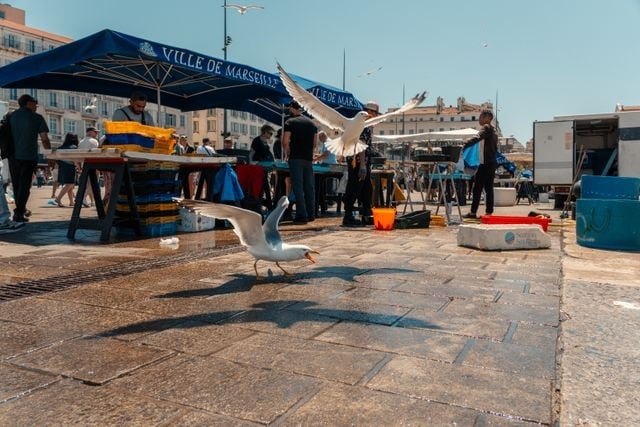
Weather words such as cagnard [blazing heat] and ça pègue [it’s sticky] are just as revealing. The South talks about heat because heat is part of daily life there. But these words do not describe the weather from a distance. They describe how the weather feels on your skin. That is the useful lesson for learners: regional expressions often tell you what people notice most in their environment.
There is also a strong link between southern expressions and sound. Sources describe the southern accent as more musical or chantant [singing / sing-song], with a softer, slower rhythm than the quicker, more clipped speech often associated with Paris. That does not mean everyone in the South speaks the same way, but it does help explain why expressions such as oh fan [wow / oh my], vé [look], peuchère [poor thing], and m’enfin [come on / oh, come on] feel so natural in spoken interaction. They are built for reaction, emphasis, and shared feeling.
For French learners, the safest approach is to enjoy these expressions first as recognition vocabulary. Use them lightly if you are in the South and have heard locals use them. Avoid dropping fada [crazy / eccentric], pastaga [pastis], and ça pègue [it’s sticky] into a formal meeting in Paris unless your goal is to confuse everyone before lunch. But when you are in Provence or Marseille, understanding these words helps you hear the region more clearly.
French Phrases from Northern France and the Ch’ti Region
Northern France has a strong regional identity, and language is a big part of it. Around the old Nord-Pas-de-Calais region, especially near Lille and the Belgian border, you may hear references to Ch’ti [Northern French dialect / person from Northern France]. The term is linked to the local dialect, where words such as toi [you] and moi [me] can sound closer to ti and mi in regional speech.
One of the most famous Northern French words is drache [heavy rain]. In standard French, you might say pluie [rain] or il pleut beaucoup [it’s raining a lot]. In the North, quelle drache ! [what a downpour!] gives the weather a much more local flavour. It makes sense in a region often associated with grey skies and rain, but the word does not sound miserable. It has a kind of dry humour to it, as if the weather is annoying but not exactly surprising.
Northern French also has strong food words, such as cougnou [Christmas sweet bread]. This is a festive bread associated with Northern France and Belgium, traditionally eaten around Christmas. You probably will not need this word to survive a trip to Paris, but if you are in the North during the holidays, On va acheter un cougnou [We’re going to buy a Christmas sweet bread] suddenly becomes very useful. Regional food vocabulary is often one of the clearest ways local speech preserves local culture.
A Ch’ti-influenced word list can look very different from standard French. For example, some sources give cayelle [chair] for chaise [chair], yux [eyes] for yeux [eyes], and glaine [hen] for poule [hen]. These are not words I would recommend throwing into conversation randomly unless you are speaking with someone from the region who has already opened that door. But as listening vocabulary, they are a reminder that regional French can sometimes feel like a neighbouring language hiding inside French.
A learner’s best approach in Northern France is to keep standard French as the base and treat Ch’ti words as local treasures. If someone teaches you a word like drache [heavy rain], use it with a smile. If someone starts giving you a full Ch’ti vocabulary lesson, congratulations. You have probably been accepted into a very local conversation.
How Northern French Slang Reflects Local Identity
Northern French slang reflects local identity because it often carries a strong sense of belonging. The word Ch’ti [Northern French person / dialect] itself is not just linguistic. It points to a region, an accent, a history, and a way of being recognized as from the North. After the film Bienvenue chez les Ch’tis [Welcome to the Sticks / Welcome to the Ch’tis], a comedy about a postal worker from southern France who is transferred to the North and gradually discovers the warmth behind the stereotypes, became a huge success in France, Ch’ti identity became even more visible in popular culture.
This is important for learners because regional speech is not just “wrong French” or “funny French.” In places like Northern France, local words help people mark where they are from. They can be affectionate, comic, nostalgic, or proudly regional. A word like drache [heavy rain] does not only describe rain. It sounds like rain from the North.
There is also a practical lesson here. French learners often imagine that if they understand Parisian French, they understand all French in France. Then they travel a few hours north and hear a local word that was not in any textbook. That does not mean their French has failed. It means they have reached the regional layer of the language.
I would tell learners to listen for these words first rather than rush to use them. Regional slang can create instant warmth when used naturally, but it can sound like imitation if used without context. A good rule is simple: learn the word, understand the joke or feeling behind it, and use it only when the setting invites it.
French Words from Normandy and Brittany
Normandy and Brittany give us a different kind of regional French. These regions are not usually described with the same sun-soaked expressiveness as Provence, but their vocabulary has its own charm. Coastal geography, older local languages, rural life, and local identity all leave traces in the way people speak.
A useful Norman example is gadoue [mud / slush]. Standard French has boue [mud], but gadoue [mud / slush] has a thicker, messier feeling. You might hear Regarde-moi toute cette gadoue ! [Look at all this mud!] after heavy rain, in the countryside, or anywhere the ground has become a problem for your shoes. It is not a glamorous word, but it is very satisfying. Some words simply sound like what they mean, and gadoue [mud / slush] is one of them.
Brittany offers words shaped by Breton influence. One example from regional vocabulary is becquer [to kiss]. In standard French, you would usually say embrasser [to kiss]. In a Breton-influenced context, Viens que je te becque ! [Come here so I can kiss you!] has a warmer, more local sound. This is the kind of word that tells you something about intimacy and family speech rather than formal French.
These regional words also show why learners should not think of France only through its big cities. A word from Normandy might come from rural or rainy everyday life. A word from Brittany might preserve a trace of Breton-speaking culture. Both remind us that local French is not random decoration. It is connected to place.
Coastal French Expressions You Won’t Hear in Paris
Coastal French expressions often come from very concrete local life: weather, countryside, family, food, and place names. That is why a word like gadoue [mud / slush] feels so different from a more neutral textbook word like boue [mud]. It belongs to actual ground, actual rain, and actual shoes that now need serious help.
Brittany’s becquer [to kiss] works differently. It is not about weather or landscape. It is about closeness. A standard learner might know embrasser [to kiss], which is useful everywhere. But becquer [to kiss] gives you a local colour that standard French does not provide. I would not teach this as the first word for “kiss,” but I would absolutely teach it as a beautiful example of how regional language survives in affectionate speech.
The key point is that these words are not necessarily useful everywhere. A Parisian may understand some of them, especially if they have heard them in media or family contexts, but many regional words remain tied to their area. That is part of their value. They do not exist because French lacks a standard word. They exist because local speech keeps its own memory.
For learners, Normandy and Brittany are good reminders that French culture is not only café terraces and Parisian streets. It is also muddy lanes, coastal towns, family expressions, and older linguistic layers that still show up in ordinary conversation.
French Expressions from Southwest France
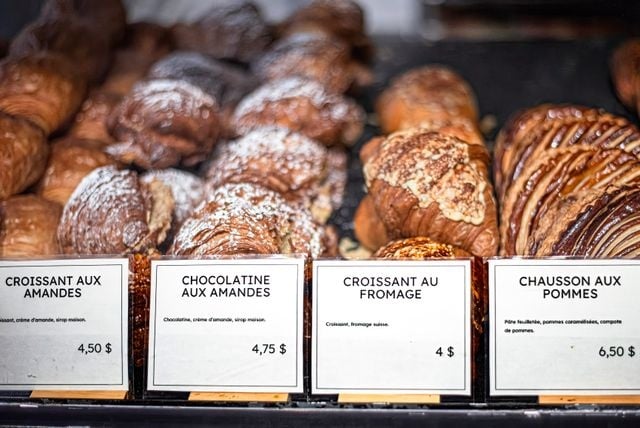
Southwest France is home to one of the most famous regional vocabulary debates in the country: chocolatine [chocolate-filled pastry]. In much of France, the same pastry is called pain au chocolat [chocolate bread / chocolate pastry]. In parts of the Southwest, especially around Toulouse and Bordeaux, chocolatine [chocolate-filled pastry] is the preferred word.
This might sound like a small bakery issue. It is not. Well, linguistically, maybe it is. Emotionally, absolutely not. French people can be wonderfully serious about food words, and chocolatine [chocolate-filled pastry] versus pain au chocolat [chocolate pastry] has become a symbol of regional pride. If you ask for pain au chocolat [chocolate pastry] in a place where everyone says chocolatine [chocolate-filled pastry], people will still understand you. But they may also silently judge your pastry politics.
The Southwest also reflects the broader influence of Occitan-speaking history. Not every local expression is about food, of course, but food terms often survive because people use them daily. A word that is heard in bakeries, markets, and family routines has a good chance of staying alive.
This is why regional French is so practical. It is not only about rare old words. Sometimes it is about ordering breakfast correctly.
Chocolatine, Local Pride, and the French Pastry Debate
The chocolatine [chocolate-filled pastry] debate matters because it shows how one word can become a badge of belonging. From a purely practical perspective, chocolatine [chocolate-filled pastry] and pain au chocolat [chocolate pastry] refer to the same object. From a regional perspective, they do not feel the same at all.
In the Southwest, saying chocolatine [chocolate-filled pastry] can signal that you know the local term and respect the regional habit. It is a small word, but small words are often where identity hides. Food vocabulary is especially powerful because people learn it early, repeat it often, and associate it with family, childhood, and place.
For learners, this is a perfect example of how to use regional French wisely. You do not need to pick a side in the pastry war for life. But if you are in Toulouse or Bordeaux, asking for une chocolatine [a chocolate-filled pastry] is a simple way to sound a little more locally aware.
The lesson is broader than breakfast. Regional expressions often matter most when they connect to everyday life. People may forgive a grammar mistake quickly, but they remember when you notice the word that belongs to their region. That is where language learning becomes more than communication. It becomes cultural attention.
French Sayings from Alsace and Eastern France
Alsace and Eastern France are especially interesting for French learners because the region sits at a historical and linguistic crossroads. French is the national language, of course, but Alsace has long been shaped by contact with Germanic languages and border-region identity. That history leaves traces in accents, vocabulary, and local expressions.
One colourful example is râler comme un pou [to complain intensely / to grumble like a louse]. Standard French already has râler [to complain / to grumble], a very useful verb if you spend any time listening to French people talk about transport, politics, paperwork, or the weather. The Alsatian-style expression râler comme un pou [to complain intensely] adds a more vivid, slightly comic image. It is not just complaining. It is complaining with dedication.
You might hear a sentence like:
Il râle comme un pou depuis ce matin.
[He has been complaining nonstop since this morning.]
This kind of expression is useful because it shows how regional French often takes a standard idea and gives it a local twist. The learner probably already knows râler [to complain]. The regional phrase makes it more memorable, more visual, and much more conversational.
Eastern France also reminds us that border regions rarely fit neat linguistic boxes. A learner may hear standard French in school, administration, shops, and media, but local speech can still carry older layers of identity. Alsace is not “less French” because it has Germanic influence. It is French with a border-region memory.
French Expressions from French-Speaking Belgium and Quebec
French does not only change inside France. It changes across the entire Francophone world. Belgium and Quebec are two great examples because both use French every day, but each has its own vocabulary, rhythm, idioms, and cultural references.
In Belgium, one useful festive expression is aller à guindaille [to go out partying / to go to a student party]. It is especially associated with student life and social drinking culture. If someone invites you to aller à guindaille [go out partying], they are not suggesting a quiet grammar workshop. They mean a night out.
Belgium also has à-fond [down in one / chugging a drink], used when someone drinks a beer in one go. This reflects a social context where beer culture is very present, though learners should obviously treat drinking expressions as cultural vocabulary, not as homework instructions. Nobody needs to practise fluency by alarming a bartender.
Quebec gives us a completely different set of expressions, from everyday expressions to colourful Quebec curse words that reflect the province’s unique history, humour, and cultural identity. One of the most famous is avoir mal aux cheveux [to have a hangover], which literally means “to have sore hair.” It is funny, visual, and extremely Quebec. Standard French would usually use avoir la gueule de bois [to have a hangover], but j’ai mal aux cheveux [I’m hungover] has a very local flavour.
Another Quebec expression is j’ai mon voyage [I’ve had enough / I’m fed up]. Literally, it sounds like “I have my trip,” which is exactly why learners should not translate regional idioms word for word. It means you are irritated, overwhelmed, or done with a situation. It does not mean you have eaten enough, and it does not mean your suitcase is packed.
Quebec also uses words such as jaser [to chat] and un char [a car]. Standard French has bavarder [to chat] or discuter [to talk / discuss], and une voiture [a car]. But in Quebec, On va jaser [We’re going to chat] and mon char [my car] are ordinary local forms.
Why French Changes Across the Francophone World
French changes across the Francophone world because French-speaking communities have different histories, neighbours, climates, institutions, and daily routines. The French spoken in Paris, Brussels, Montreal, Marseille, Dakar, or Abidjan shares a common base, but each place adds its own vocabulary and habits.
Quebec French developed in North America, surrounded by English and shaped by its own history. Belgian French developed beside Dutch, German, and local Belgian realities. French in the South of France carries Occitan and Provençal traces. French in Alsace sits near Germanic influence. None of these varieties is “broken French.” They are examples of how a living language adapts to local life.
For learners, this can feel both exciting and unfair. You learn one word for “car,” une voiture [a car], and then a Quebec speaker says un char [a car]. You learn standard French for “to chat,” and then someone says jaser [to chat]. But this is not a reason to panic. It is a reason to listen more closely.
The practical rule is this: use standard French as your foundation, then add regional French when it matches your travel plans, work needs, or personal connections. If you are going to Quebec, learn a few Quebec expressions. If you are heading to Provence, learn fada [crazy / eccentric], peuchère [poor thing / oh dear], and cagnard [scorching heat]. If you are visiting Belgium, recognize that local French will not always sound exactly like the French you learned from a Paris-based textbook.
This is how French becomes more human. It stops being a single classroom voice and becomes a network of real speakers in real places.
Learn Real Regional French for Travel with Native Teachers
Regional French is one of the best reminders that language learning is not only about grammar. Grammar gives you structure, but regional expressions give you people, places, humour, and context. They help you understand what locals actually mean when they move beyond careful textbook French.
At Language Trainers, our personalised French courses are built around your goals, level, and the kind of French you actually want to use. A learner travelling to Provence may want practical phrases, southern expressions, and listening practice for the local accent. A learner moving to Quebec may need help understanding Quebec vocabulary and everyday speech. A learner preparing for business in France may need standard professional French first, with regional awareness added where useful
Our and other major areas are especially effective for this kind of learning because regional language is not only written. It is heard, repeated, corrected, and practised in conversation. A teacher can help you notice tone, pronunciation, register, and context. They can also tell you when a regional expression sounds warm and natural, and when it might sound forced.
That focus on live correction and pronunciation is something students often notice quickly. Michael Frost from Birmingham, who studied French with Alexandre through Language Trainers, said:
“I chose to learn French with Language Trainers over a period of four weeks. I feel I have learnt a lot and my pronunciation has also improved.”
That kind of progress matters for learners who want to understand real spoken French, not just read it on a page. Regional expressions, accents, and natural rhythm become much easier to follow when you have a teacher who can slow them down, explain the context, and help you practise them in conversation.
You can study with Language Trainers face-to-face, online, or through a combination of both. If you want to go beyond bonjour and understand the French people actually use in different places, contact Language Trainers today and ask for a free trial French lesson.
→Sign Up Now: Free Trial French Lesson With a Native Teacher!←
FAQs About Regional French Expressions
1. Do people in Paris understand regional French expressions?
People in Paris may understand some regional French expressions, especially if they have appeared in films, TV, songs, or national jokes, but many local words will still sound unfamiliar. A Parisian will probably understand famous terms like chocolatine [chocolate-filled pastry] or fada [crazy / eccentric], but more specific words from Brittany, Alsace, Provence, or the Ch’ti region may need explanation. That is why regional French is best learned as recognition vocabulary first. You do not need to use every local expression, but understanding them helps you follow real conversations when you travel.
2. What are some common French expressions from the South of France?
Common French expressions from the South of France include fada [crazy / eccentric], peuchère [poor thing / oh dear], cagnard [blazing heat / scorching sun], ça pègue [it’s sticky / it sticks], vé [look / check it out], and pastaga [pastis]. Many of these words are associated with Provence, Marseille, heat, food, terraces, and informal conversation. They often sound warmer, more physical, or more expressive than their standard French equivalents.
3. What are some common French expressions from the North of France?
Common French expressions from the North of France include drache [heavy rain], Ch’ti [Northern French dialect / person from Northern France], and local Ch’ti words such as cayelle [chair], yux [eyes], or glaine [hen]. These words reflect the strong regional identity of Northern France, especially around Lille and the old Nord-Pas-de-Calais region. Learners should mainly recognize these expressions rather than force them into conversation, unless they are speaking with locals who use them naturally.
4. How can I learn regional French before travelling to France?
The best way to learn regional French before travelling to France is to combine standard French with targeted exposure to the region you plan to visit. A learner going to Provence should practise southern expressions and listening comprehension for the local accent, while a learner going to Lille, Brittany, Alsace, or Toulouse will benefit from different vocabulary and cultural notes. One-to-one lessons with a native teacher who speaks the target variety are especially useful because the teacher can explain pronunciation, tone, register, and when a local expression sounds natural rather than forced.