What Tango Lyrics Teach You About Argentine Spanish
Tango is one of the best doors into Argentine Spanish because it gives you something a textbook…


UK 0330 460 95 64 Ireland 01 574 7871

UK 0330 460 95 64
Ireland 01 574 7871

Tango is one of the best doors into Argentine Spanish because it gives you something a textbook…

Spanish pronunciation is not just about getting each sound right in isolation. To understand native Spanish, you…

What not to say in Spanish is not just a vocabulary problem. Many travellers learn the right…

When students begin learning how to talk about family in Spanish, they usually expect a simple vocabulary…

Even confident Spanish learners run into moments where something sounds right in their head but lands wrong…
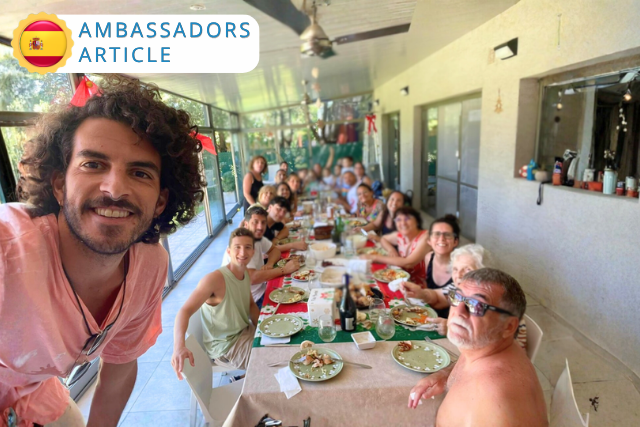
Christmas in Argentina lives on in my memory as a warm night full of noise, family, and…
You may have heard a thousand times that you should learn Spanish... but why? What makes it different (or better) than learning other popular languages such as Mandarin Chinese, German, or Arabic? Here we present you with some reasons why you should learn Spanish today regardless of your age, background, or level.
Learning Spanish can help you boost your career, especially if you plan to do business with Latin America. As you probably know already, most Latin American countries speak Spanish (except for Brazil, which speaks Portuguese), and the number of fluent English speakers is very low.
For example, Education First publishes an annual study comparing English proficiency among countries and regions where English is not the native language. According to the 2025 EF English Proficiency Index, Argentina remains the highest-ranked country in Latin America, placing 26th globally out of 123 countries and regions with a score of 575. The results show that English proficiency still varies considerably across Latin America, which can make Spanish especially valuable for anyone planning to work or do business in the region.
Plus, there are nearly 4.4 million Latino-owned businesses in the United States that contribute more than $700 billion to the American economy every year, according to the U.S. Hispanic Chamber of Commerce. So, learning Spanish can be beneficial at home, not only if you plan to travel abroad.
So, if you
... then, learning Spanish is essential for your career or business to succeed. And if you need more arguments to convince you why you should learn Spanish for your career, you should read our article on 5 reasons why you should speak Spanish in the workplace. And here you can find essential phrases in Spanish to use for business!
”The classes with Javier have been great so far. He is a flexible, communicative and open-minded teacher who plans his lessons around my needs.”
Lucyna Sobecka - Spanish course in Cork
If you are an avid traveller, then you already know the importance of knowing the local language to get by in a foreign country. This is especially true in places like Central or Latin America, where bilingualism in English is not widespread. For instance, all the street signs, magazines, restaurant menus, etc. are in Spanish. You’ll be lucky if you find something in English at the airport!

Furthermore, there’s no better way to connect with the local culture than by knowing the local language. Learn Spanish and you will get to know more about their customs and traditions, and you’ll even be able to discover secret places unknown to tourists. You won’t be restricted to resorts or hotels where everybody speaks only English!
Spanish is a Romance language. This means that it is a linguistic sister to many other European languages such as French, Portuguese, Italian, and even Romanian. Why is this relevant, you may ask? Because it means that, once you are proficient in one of them, it will be a lot easier to learn the others!
Their vocabulary is very much alike (compare “palabras” in Spanish with “palavras” in Portuguese or “idea” in Spanish and “idée” in French) and their grammatical rules and syntax are also similar. So, if you plan to be a polyglot soon, you can start by learning Spanish and take it from there!
Acquiring Spanish is not only useful if you plan to go abroad. Locally, you’ll find millions of people who speak Spanish as their first or second language. For example, in the USA there are more than 40 million Spanish speakers, to be precise, while you’ll find over 150,000 in the UK and 140,000 in Australia (according to the 2011 census).
And if you are wondering if you can put your Spanish skills to the test at home, the answer is: of course you can! For instance, if you live in Washington DC, you can attend the yearly Mexico Films Across Borders, hosted by the Mexican Cultural Institute on Dupont Circle. Or, if you are in Chicago, you can visit the Little Village area, which is part of the South Lawndale neighbourhood on the west side of the city. There, you can find Mexican bakeries, Cuban grocery stores, and many other shops with items of Latino origin.
Similarly, those living in the UK will find their professional opportunities broadened by knowing Spanish, as trade between the UK and Latin America doubled between 2011 and 2018, according to a report by the RSA Insurance Group.
And if you live in Australia, every year you can attend the Spanish Film Festival celebrated in Adelaide, Sydney, Canberra and Brisbane, in addition to finding museums, music shows, and restaurants that will help you connect with the Hispanic culture on a whole new level.
Like English, Spanish is a language with many dialects, accents, and regional variations. It’s only natural that, being spoken in 21 countries, there are major differences in grammar, vocabulary, and pronunciation. For example, did you know that car is “auto” in Argentina, “carro” in Mexico, and “coche” in Spain? The same happens with common words like avocado, straw, or T-shirt.
| English term | European Spanish | Argentinian Spanish | Mexican Spanish |
|---|---|---|---|
| Basketball | Baloncesto | Básquet | Baloncesto |
| Straw | Sorbete | Pajita | Popote |
| T-shirt | Camiseta o sudadera | Remera | Playera |
| Ceiling | Tejado | Techo | Techo |
| Cash (slang) | Pasta | Guita | Lana |
| Hanger | Colgadero | Percha | Gancho |
| Strawberry | Fresón | Frutilla | Fresa |
Don’t fret, though: these Spanish varieties are mutually intelligible, so locals will be able to understand you even if you don’t remember the right word for skirt. Just bear in mind that there is no “standard” Spanish you can learn. Instead, we recommend that you study the Spanish variety that suits your needs.
But if you are planning to move to a certain Spanish-speaking country and would like to learn Spanish focusing on that particular variety, you can contact us today! We will pair you up with native-speaking, professional Spanish instructors with years of experience. Or you can take a look at some of our language guides:
Of course not! Just as with American and British English, castellano (the variety spoken in Latin America) and español (as spoken in Spain) have differences in grammar, pronunciation, style, and vocabulary. Here are some of them:
While in Spain the second-person plural is “vosotros”, Latin American Spanish uses “ustedes”. This makes verb conjugations very different (and complicated!). Watch this:

Or:
This is a phenomenon that takes place in South America, more specifically in Argentina and some parts of Uruguay. There, instead of using the pronoun “tú”, people use “vos”. Similar to what happens with vosotros and ustedes, the differences in verb conjugation are huge, especially when it comes to pronunciation:

Castilian and European Spanish also differ in their pronunciation of the letter “s”. While in Latin America people pronounce “abrazo” with an “s” (as in “sit”), Spaniards would say “abrazo” with a sound called theeta (θ) which in English is spelt “th” as in “throw”. Watch this video by the BBC to find more examples of this phenomenon!
These are only some examples of these variations. If you’d like to learn more, you can always read our article on Castilian vs European Spanish!
If you have decided to take the leap and start learning Spanish, you won’t regret taking lessons with a teacher. At Language Trainers, for example, we partner with professional, experienced instructors who are native speakers of the language they teach.
Learning with a professional tutor means they’ll be able to explain even the most complex formal aspects of Spanish in an engaging way while they transmit cultural values and traditions to you that can’t be learned otherwise. If you are not convinced yet, here you can find many compelling reasons why you should start learning Spanish with a teacher today.
It can be really hard to stay motivated if you are not sure of what you are doing or if your efforts are paying off. Motivation plays a crucial role when learning anything, especially a foreign language.
It’s only natural to feel frustrated when learning a language. Sometimes, things will not go as well or as fast as you may want, no matter how much effort you put into learning them. For example, mastering the rolled R’s as a native English speaker can take a lot of time!
Your teacher, then, will help you stay calm and motivated, and remind you that these things take time. Plus, they will give you advice based on their experience of what to do if you get stuck.
With all the distractions we have today, it can be easy to drift away from your study time and end up using Instagram without even noticing! This will not happen if you take language lessons with a teacher. Instead, you’ll have an hour, or two, or any period you agree with your tutor of focused language instruction (and fun!).
Also, a professional Spanish tutor can help you focus on what’s important. If you are learning Argentinian Spanish on your own, for example, you may think that the present perfect tense (he ido) is important, but in reality, it’s rare for people to use it.

Today, you can find amazingly well-written (or recorded) materials on the internet entirely for free. But, no matter how good they seem, chances are you are going to have questions. Instead of spending hours flipping through books trying to find the correct answer, you can just ask your teacher.
No matter our individual reasons for learning Spanish, the ultimate goal is always the same: to be able to communicate our ideas in this foreign language. For this, you’ll need to pay special attention to your productive skills: writing and speaking.
While writing can be developed on your own, speaking is a different story. Without someone who gives you feedback on your pronunciation, intonation, and overall performance, it’s hard to truly advance. Luckily, your teacher can help you take your speaking skills to the next level and help you pinpoint the areas that need some improvement.
If you have already decided you’d like to learn Spanish, now comes another decision: whether to study alone with a private teacher or with a group. Both of these options have great advantages and some cons, too. Let’s review them below!
Individual language lessons are brilliant options for people who need to advance their skills quickly and in a personalised way. For instance, an engineer who needs to sit for an exam to advance in their career will find it much more useful to hire a teacher who can take care of this very specific requirement. Other advantages of one-to-one lessons when compared to group language classes include:

If you would like to socialize while learning Spanish, then group lessons are your best choice. And there are other benefits of choosing group sessions instead of private Spanish classes:
If all of this has inspired you to learn Spanish with a group, we can help! We can offer open group lessons, where you’ll meet learners from different parts of the world with a language level similar to yours. Or you can sign up for private Spanish lessons with friends, family, or co-workers. The choice is yours!
If you are looking to learn Spanish fast, now there’s another important decision you have to make: to study face-to-face or online. While these two ways of learning are fairly similar (after all, you’ll have an instructor with whom to interact and acquire everything you need to be fluent in Spanish), there are specific advantages to choosing one or the other. Let’s explore these benefits below!
And if you’ve never taken an online lesson before and you’re wondering how they work, you can watch our video featuring a Spanish lesson and get an idea of the way you’ll be learning!
It may be the case that you don’t want to learn with a teacher, either because you are shy, you don’t have enough money, or you feel you don’t have the time. In any case, today there are thousands of resources and tools you can use to learn Spanish on your own. From apps like Duolingo to traditional coursebooks, there’s something for everyone.
This is one of the most important questions to address. When learning Spanish, there are many aspects to consider and it’s hard to know where to start. The first thing, then, is to know your level. Even if you have never studied Spanish before, chances are you already know some words and expressions.
So, it’s a great idea to take a Spanish level test. At Language Trainers, for instance, we offer a completely free level test you can take anytime, anywhere. Just complete as many questions as you want (in batches of 10) and receive your results via email!
Once you understand your current level, it’s time to start looking for suitable materials. Don’t forget to choose elements that also suit your interests. For example, if you love literature, you can always use books, short stories, or even poems to increase your language level. The same happens if you’d like to learn Spanish with music (here are some artists you can follow!).
If you ever tried to listen to Spanish telenovelas or to understand Shakira’s songs and you couldn’t get a single word, then these resources are for you!
Writing can be tough to learn if you don’t have anyone who reads and corrects your texts. After all, it’s very difficult to self-assess your own productions, no matter how advanced in your language journey you are. But there are some websites and apps that can help you improve your writing skills from home. Let’s take a look at them!
Those who are studying Spanish by themselves may think it’s almost impossible to improve their speaking ability without a teacher, but this is not true. In addition to speaking to yourself in front of a mirror, there are some other options to put your skills into practice:
Spanish-speaking people are famous for their use of hand gestures and facial expressions when expressing themselves. If you want to communicate fluently (and understand what others do!), you should definitely learn more about the most popular hand gestures used in your target Spanish variety.
Find some guides below:
Very few people can claim to love learning Spanish grammar. If you are one of them… kudos to you! But if you are not and you’re tired of fill-in-the-blanks exercises, you may find these tips to learn Spanish grammar fast useful!
Bonus: Did you know you can learn Spanish grammar by watching TV? In case you didn’t, read our article and discover some great Spanish-speaking shows (and ideas on how to acquire grammar) to learn while having fun.
Are you bored of using the same old vocabulary exercises and lists to learn new terms and expressions? You can use the following tips to learn Spanish vocabulary in a fun and engaging manner.
While all language skills are fairly difficult to perfect, pronunciation is one of the most dreaded. First, because you need to be brave enough to pronounce words in a foreign language and, secondly, it’s hard to find a qualified tutor who can teach you how to speak Spanish like a native. While we can write a bible on Spanish pronunciation, here you can find the most important tips to feel comfortable when pronouncing in Spanish. Soon, you’ll be mistaken for a native speaker!
In case your budget is limited and you would like to study Spanish for free (at least at the beginning!), there are countless apps, tools, and resources you can use. Find them below!
Looking to acquire Spanish on the go? Today, you can find plenty of free apps with bite-sized lessons that are ideal for beginner and intermediate-level students. Most of them focus on vocabulary and a bit of grammar through translation exercises, while others also include short videos featuring phrases crucial for communication. Start learning Spanish with these apps!
If you find that Spanish is nightmarish to conjugate, you’ll be happy to know that today you can use online verb conjugators. This is software that automatically gives you all the possible conjugations of a certain verb after you type it. Wonderful, isn’t it? Some great verb conjugators to learn Spanish for free include:
Visual learners will be happy to know they don’t have to be proficient drawers to make their own flashcards. Today, you can find dozens of free flashcard generators where you can include text, images, video, and even phonetic script. Here are some examples you can use to learn Spanish for free.
If you like music, you’ll enjoy learning Spanish like never before with Lyrics Training. As the name shows, this app features hundreds of songs in Spanish by your favourite artists, such as Shakira, Camila Cabello, Romeo Santos, or Jennifer Lopez.
You just have to pick your level (beginner, intermediate, advanced, expert), the song you’d like to use and get started with the game! You’ll be shown a music video with incomplete lyrics, and you’ll have to type the words missing from what you hear. Soon, you’ll notice how your listening comprehension improves!
We all know that Google Translate can fail, but what alternatives do we have? Luckily, there are many, and the best of them is Linguee.
This is not a traditional dictionary you can use for translation. Instead, it’s a corpus that shows how different news outlets, publishing houses, and even social media users translate words or phrases from different languages into Spanish. In this way, you’ll find dozens of examples of how to use Spanish terms instead of an automatic translation by a machine like Google Translate. Try it out!
Like everything in life… it depends! If you are a native English speaker who doesn’t know any other language and has never had contact with Spanish-speaking cultures, then Spanish can be hard to acquire. The vocabulary is strikingly different from English, not to mention the grammar and pronunciation systems!
But, if you already speak a Romance language such as French, you’ll find verb conjugations are a piece of cake. It all comes down to your abilities and background!
Experts claim that English speakers can hold a conversation after 480-600 hours of study. This means that:
Contact us and we will design a Spanish face-to-face or online course that suits your needs and requirements!
Thinking about travelling to Latin America or Spain soon but you don’t know how to say anything but “gracias”? Don’t worry, we can help! Find below some survival phrases that will help you get by in any Spanish-speaking country.
| Phrases (EN) | SPANISH | |
|---|---|---|
| Greetings | Hello / Hi | Hola |
| How are you?/ How are you doing? | ¿Cómo estás? / ¿Cómo te va? | |
| Good morning/afternoon/night | Buenos días, Buenas tardes/noches | |
| Thanking others | Thank you! Thanks! (You're welcome) | Gracias! Muchas gracias! (de nada) |
| I appreciate it. | No hay de qué. | |
| Asking for forgiveness | Apologies | Disculpas. |
| I’m sorry / I’m very sorry | Perdón. Lo siento mucho. | |
| Asking for help | Where is... the bathroom/the kitchen? | ¿Dónde está... el baño/la cocina? |
| Can you help me with... my luggage/my phone? | ¿Me puedes ayudar con... mi equipaje/mi teléfono? | |
| There is a problem with/ I have a problem with... | Hay un problema con... / Tengo un problema con... | |
| Asking for information | How can I get to... the museum/the hotel/the restaurant? | ¿Cómo se llega al museo/al hotel/al restaurante? |
| Do you know where...? | ¿Sabes dónde queda...? | |
| Could you tell me...? | ¿Me podrías decir...? | |
| Ordering at the restaurant | I'd like the tuna salad/a sándwich, please | Quisiera un sándwich/una ensalada, por favor. |
| I'll have the steak/french fries, please | Voy a pedir un bife/papas fritas, por favor. | |
| Nothing for me, thanks. | Nada para mí, gracias. | |
| Asking for clarification | Sorry, can you repeat? | Perdón, ¿podrías repetirlo? |
| I don't understand. Can you say that again? | No comprendo. ¿Lo puedes decir de nuevo? | |
| What do you mean by...? | ¿A qué te refieres con...? | |
| Inviting someone | Would you like to... go to the cinema? | ¿Te gustaría... ir al cine? |
| Do you want to...? | ¿Quisieras... ir al cine? | |
| Accepting an invitation | Yes, thank you | Sí, gracias. |
| Sure! | ¡Claro! | |
| Let's do it. | Hagámoslo. | |
| Rejecting an invitation | No, thank you | No, gracias. |
| I'd love to, but I'm busy right now. | Me encantaría, pero estoy ocupado. | |
| Thank you, I have other plans. | Gracias, tengo otros planes. | |
| Asking for the price | How much is this? | ¿Cuánto es? |
| How much does this cost? | ¿Cuánto cuesta esto? |
And if you need more help, you can always resort to one of these guides:
Are you ready to get started with your language journey? Contact us today and start acquiring Spanish in the most inspiring way with professional, native-speaking instructors. Soon, you’ll be able to express your ideas with total clarity!